Lazy Gardening Video Journals

Suburban Guide to Lazy Gardening: a Video Journal
What’s Growing In My Garden

In previous summers, I’ve done a pretty good job of keeping up with semi-regular garden journal posts, complete with pictures, updates, and notes for improvement. Mostly these posts have been for myself as a way to sort of track and stay on top of this funny little side hobby of mine.

I’ve been the laziest this year. Lazy about tending the garden and lazier still about recording anything. I barely have any before photos to share at all. As nature would only have it, the thing is going completely bananas. I should admit that for the first time ever, I have not been as lazy about watering, but that means I’m remembering to do it two to three days a week instead of the usual one.

Like everything else in my life, I like the idea of tidiness when it comes to gardening. I always plan for things to go in neat little rows and to grow exactly in the space I’ve planned for them. This, of course, never happens. It is the one and only bit of raw chaos in my life that I somehow tend to embrace and it seems to finally be working for me.

Garden Harvest by the Numbers

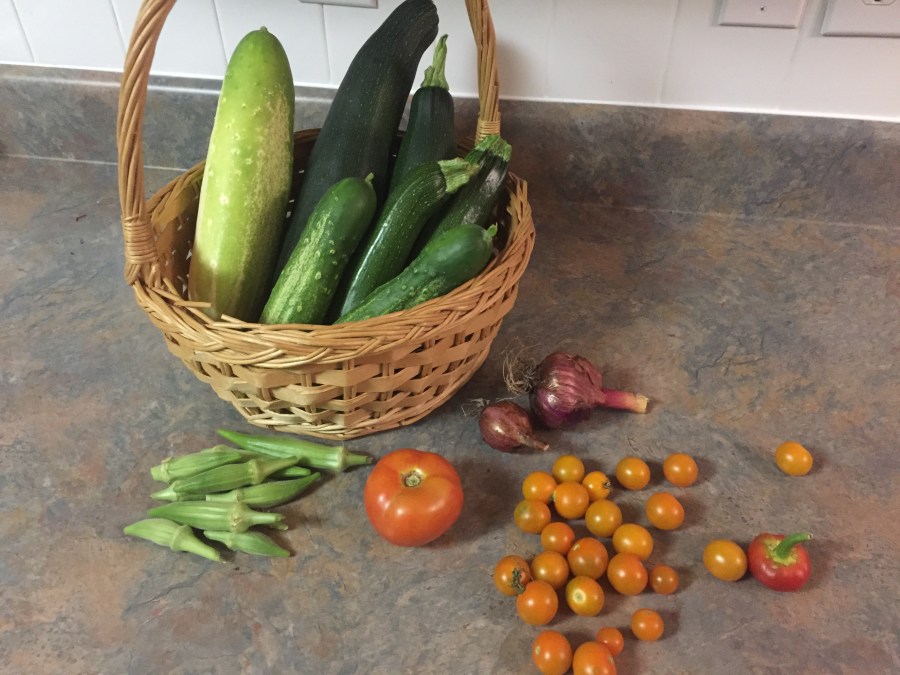
As of today, July 7, 2018 (Happy Birthday, Carter!), which is still quite early, I have harvested the following (this is a rough count):

Zucchini: 50+
Grape Tomato: uncountable
Cucumber: 10
Hot Pepper: 2
Planted last Fall Onions: 6
Reg. Tomato: 5
Okra: 20-30

Today was unseasonably shady and cool so I decided to get out there and make a couple videos to show you what is growing, and exactly how big of a mess it all is. I’m still a bit of an amateur at the video thing, so skip this if you aren’t truly interested.

Vertical Gardening
Suburban Gardening SIP system
Before Photo: grape/cherry tomato and pepper in front, lavender in middle, trellis for cucumbers.

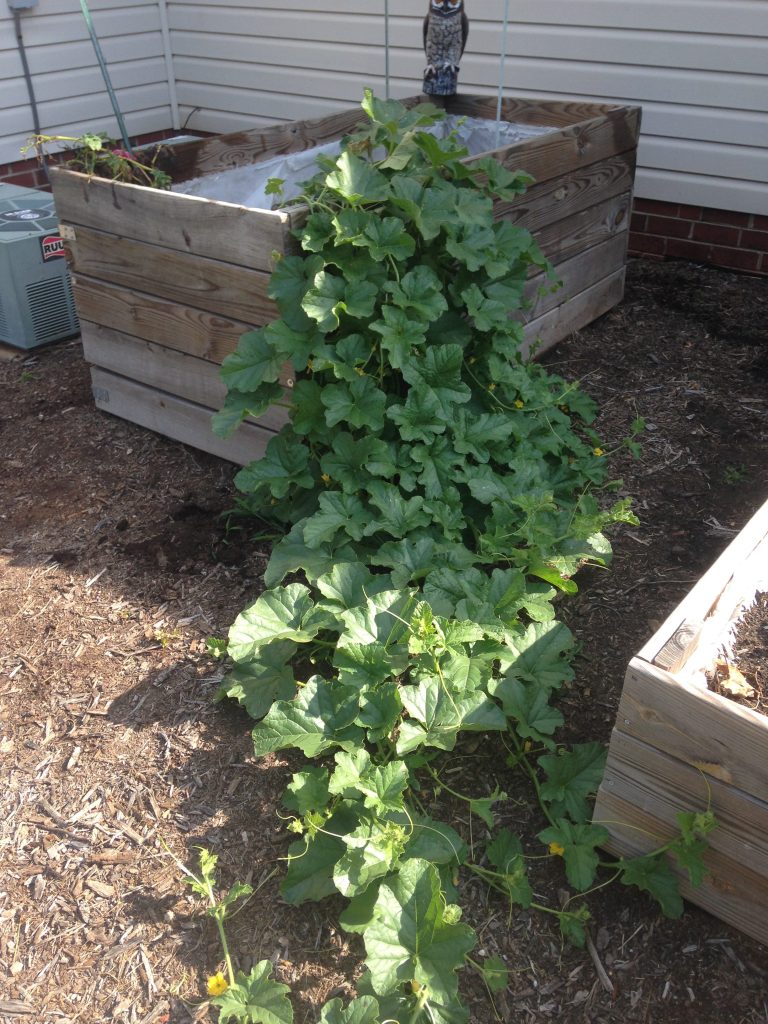
I’ve been interested in vertical gardening from the very beginning because it allows more to grow in a smaller space. This year I did to my cantaloupe what I’ve been doing with my cucumbers every year and it seems to be working.

[su_youtube url=”https://youtu.be/B2AaSZfUL_Y”%5D

Compost Volunteers and the Overflow Bed

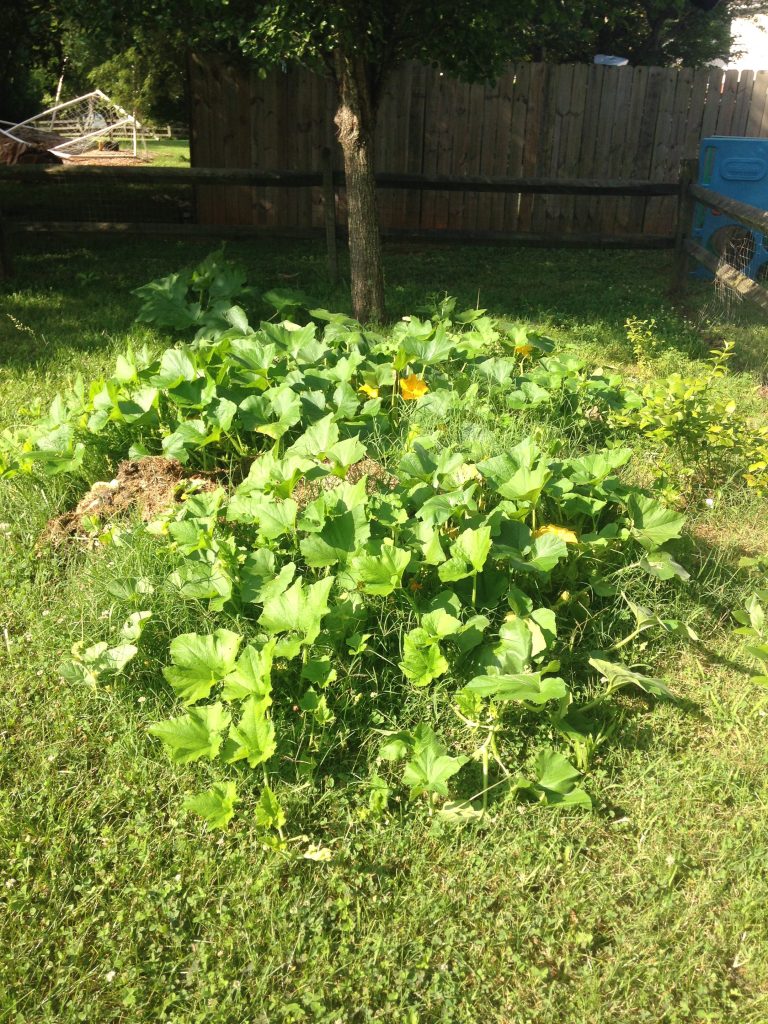
I added a new plot out in the area where I used to free range compost and subsequently grow hundreds of volunteer baby pumpkins every summer far too early for Halloween. I moved my okra to this spot this year and then filled the other half with random leftovers, including green peppers and an extra zucchini plant. The best part of this bed, however, is the amount of volunteers that have sprung up. So far we’ve identified one volunteer tomato and butternut squash. (I have never planted butternut squash so this is something that originally came from a grocery store. Talk about a side-hustle.)

[su_youtube url=”https://youtu.be/_rKOpbSPOJE”%5D

Growing Tomatoes on Poles (Sort Of)
growing tomatoes in the shade using SIP system
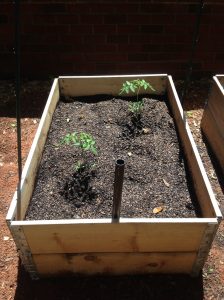
Before Photo: tomato beds on side of house, just planted.

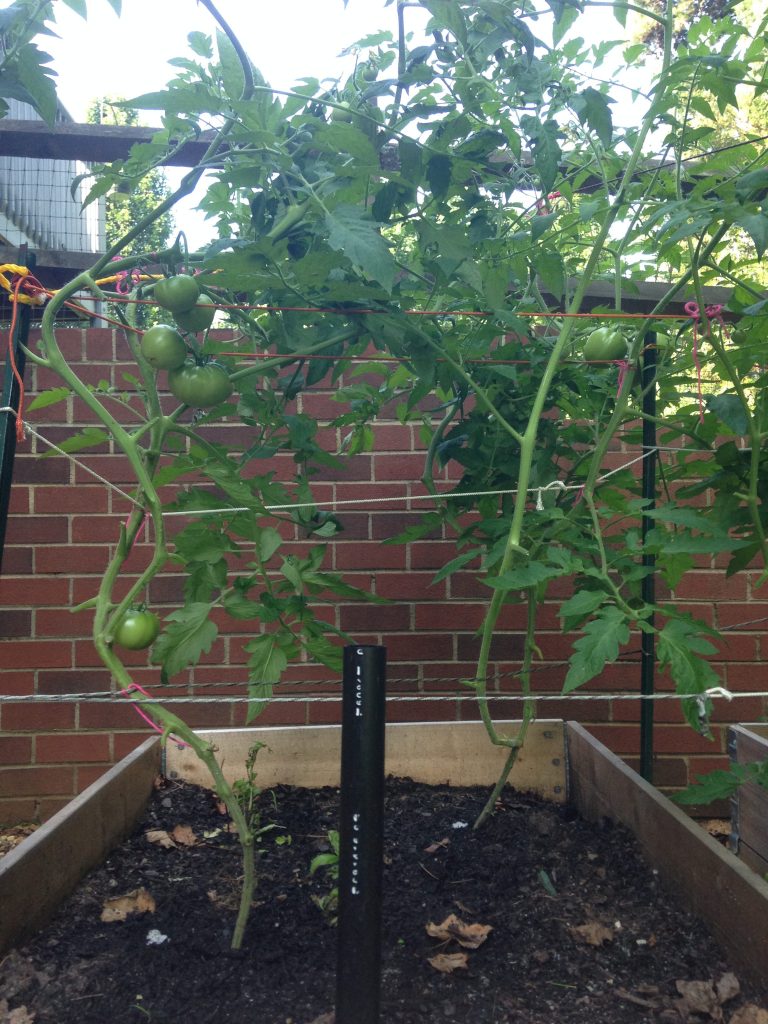
My current tomato beds were added last year and each of these boxes are SIP systems. As I mention in the video, this area gets the least amount of direct sunshine each day, which is, I assume, why the plants grow so tall. The jimmy-rigged creation to keep them somewhat tame is easily the most ghetto part of my entire garden. I never have a super high tomato yield, which is fine because who can eat that many tomatoes, but I also put very little effort into keeping them going.

Also, I used to kill my tomatoes nearly every summer from under-watering. With my SIP system in place, somewhat heavy mulching, and the lack of direct sunlight for all but three hours a day, and I can go entire weeks of forgetting these babies. They just seem to live and thrive.

[su_youtube url=”https://youtu.be/pth1I0Ok_tw”%5D

SIP System Gardening

If you are interested in my SIP Systems, which are sub-irrigation planters (some call them self-watering but this is misleading), you can see how we built them here. I could have sworn I did more posts about this but I cannot find anything right now. At any rate, the idea is that they are fully enclosed containers (we use plastic on the bottom) and the dirt sits on the top and sucks the water out of the reservoir at the bottom. I don’t fully understand it but it totally seems to work.
garden harvest
This is about what we’re getting every few days right now. Zucchini overload.

This post may contain affiliate links. Read my full disclosure here.
 

Garden Journal #16: Mid Summer Check In

June 29, 2017

At this time last year, my basil was huge, okra was very large, volunteer pumpkins were taking over, and cucumbers were vining halfway up the trellis. My “Early Girl” tomatoes were already red and ready to pick, and I had several grape “Sugary” tomatoes ready to pick.

This year is a completely different story. After a very rainy May, we continued to have above average precipitation for June as well. I’m not sure if this is the problem or what, but this seems to be a very slow season for everything I’ve planted, and many things are just looking like they will never thrive.

A Few Quick Notes

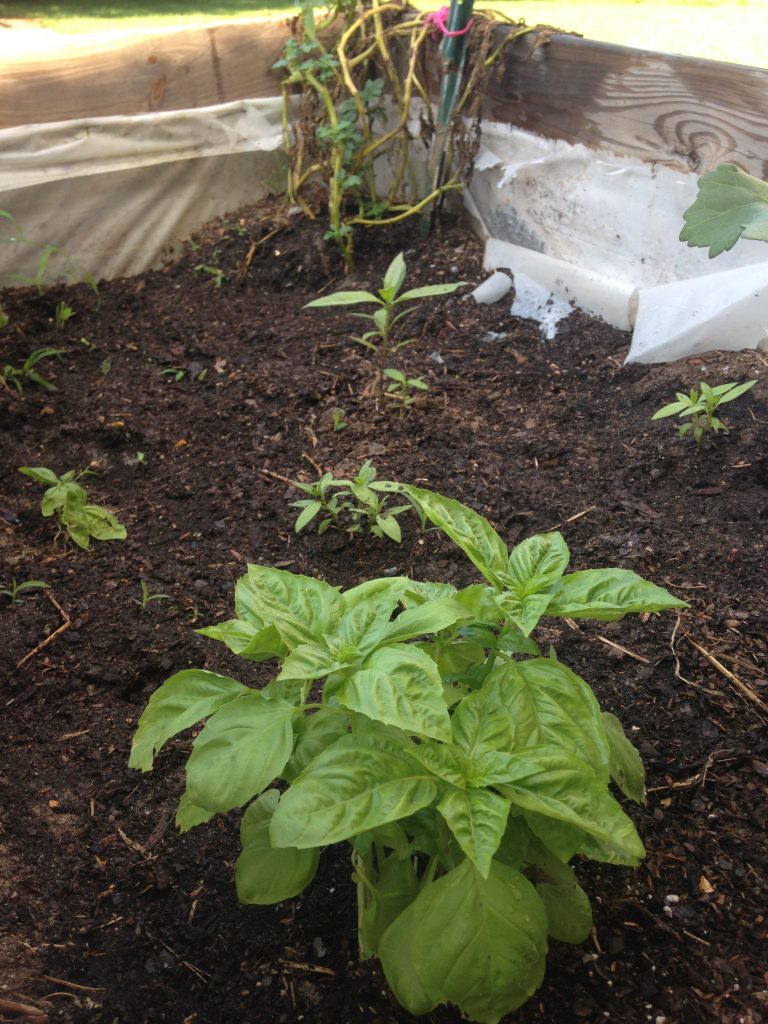
Basil: puny in the new shadier beds (and being eaten by a rabbit I believe); added two large plants to beds 1 and 2 which are doing much better.

Zucchini: harvested exactly 1 zucchini squash; plants look like they are giving up.

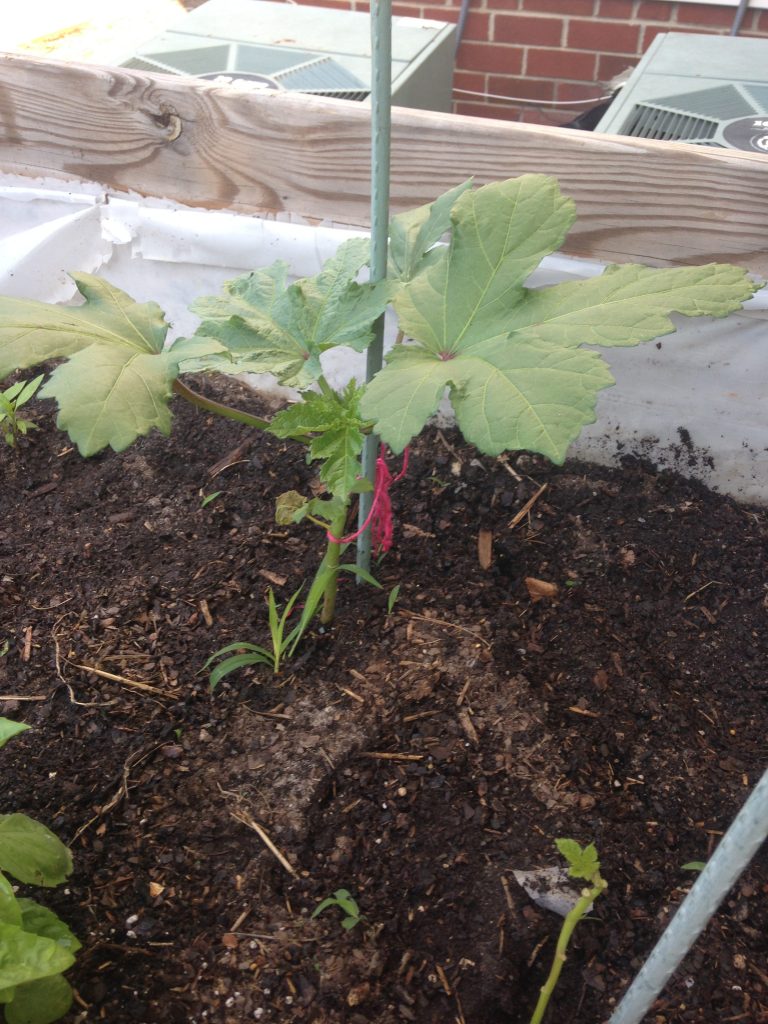
Okra: I’ve lost 2.5 out of 4 okra plants; #3 looks like it could keel over any day now, and the only one to grow is probably going to make it, but is taking an eternity.

Tomatoes: Besides my 1 “Roma,” I planted only “Goliath” tomatoes which are 65-85 days until maturity. Due to their new location with less sunshine, I was expecting maturity closer to the 85th day. They are “indeterminate” vines which have been described as “vigorous.” See the pictures. Vigorous and out of control is more like it. I had to add even more rope to my system of support, and have been pruning low hanging offshoots to encourage growth that gets more sun. Have tons of fruit, nothing yet ready to pick. That final tomato plant volunteer that I thought was a “Sugary” grape from last year is also likely another Goliath. It is huge and fruiting very slowly.

Cantaloupe: Seems to be thriving all of a sudden in bed 1; would like to build a trellis to support and get it off the ground. Several budding fruit.

Potatoes: volunteers from compost pile, have harvested a few small “new potatoes” and put the rest back to continue to grow.

Cucumber: harvested 1; at least 8 large and perfectly round fruit have seemed to cease growth altogether. Vines not growing quite as quickly nor as tall as last year.

Mint: doing just fine.

Herbs: not thriving but not dying; harvesting as needed and all are still alive.

North Carolina Raised Beds and Container Gardens
basil, milkweed, and potatoes in raised bed
Front to back: basil, milkweed, potatoes.
okra grown in raised bed
Scrawny Okra in Raised Bed
Cantaloupe growing out of raised bed
Cascading Cantaloupe
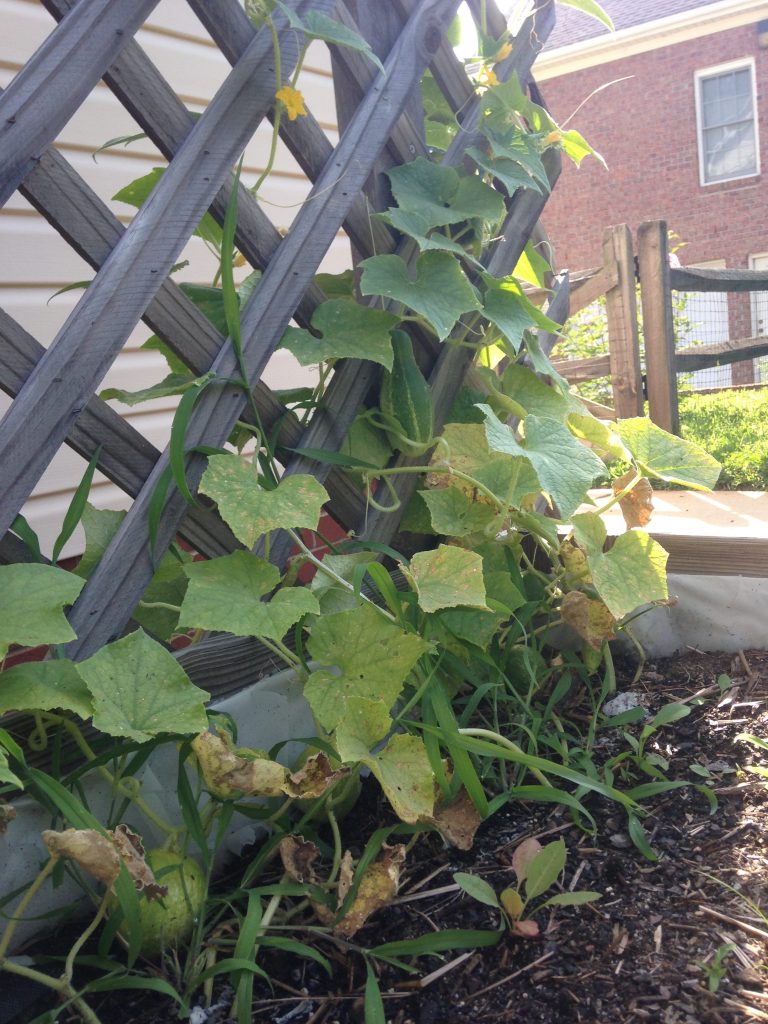
cucumber growing on trellis
Cucumber Growing On Trellis
cucumber growing on trellis
Cucumber Growing On Trellis
Tomatoes in raised bed
Tomatoes in Raised Bed
Tomatoes on support string system
Goliath Tomatoes On String Support System
Roma and goliath tomatoes, mint, and basil in raised bed
Raised Bed Roma Tomatoes, Volunteer (Goliath?) Tomatoes, Mint, Basil
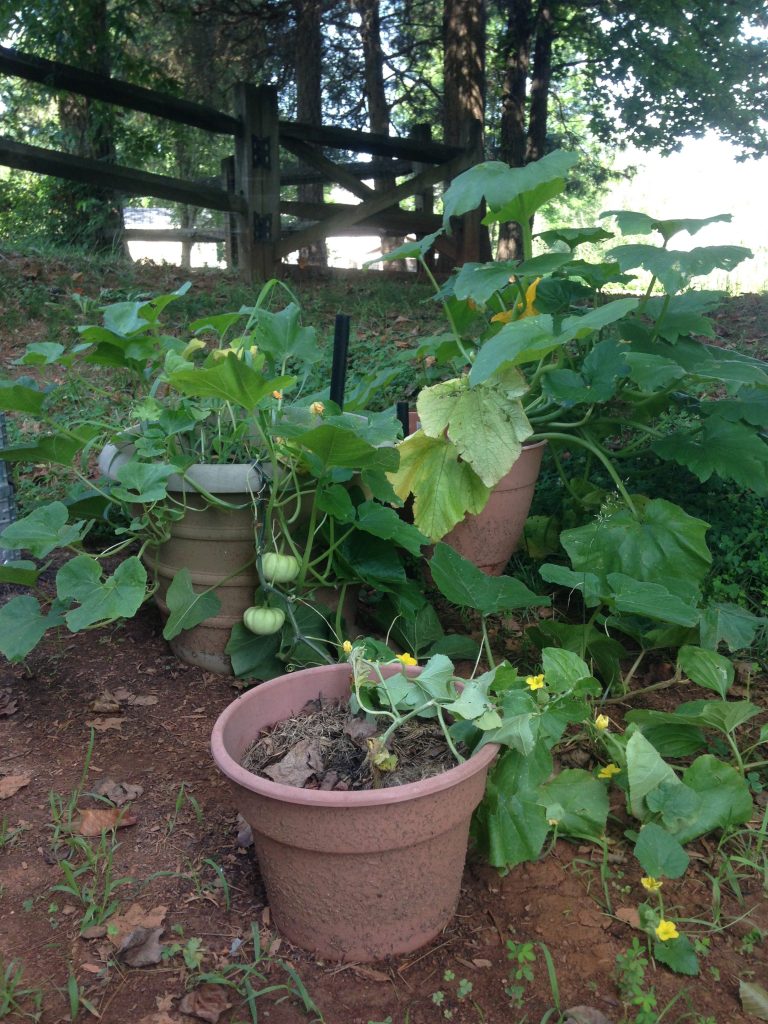
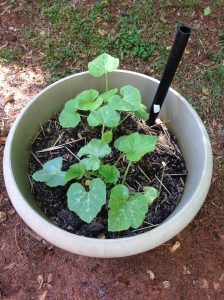
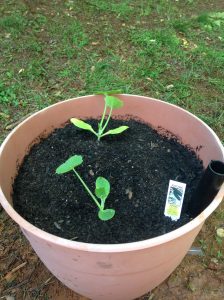
Zucchini, pumpkins, cantaloupe in container garden
Container Garden: Zucchini, Volunteer Pumpkins, Cantaloupe
Pumpkins growing out of compost pile
Compost Pile Volunteer Pumpkins
White pumpkins growing in compost pile
Volunteer White Pumpkin Growing in Compost Pile
Plans and Ideas
  • Build trellis for cantaloupe.
  • Direct pumpkins away from blueberries.
  • A-frame trellis for compost pile?

Garden Journal #14: Plants and Plans 2017

This post may contain affiliate links. Read my full disclosure here.
2016 Review

For those of you keeping up with my garden journal, thank you. I continue to (attempt) to write these posts, which often contain more container garden pictures than description, so I can refer back to them later to see what worked and what didn’t work each year in my garden.

I am still working on transferring old posts to this website. Patience. Alas.

October 11: Ending the Season

Basil went crazy. Made several batches of pesto.

Cucumbers never really turned a nice deep shade of green, but I picked them small and they were great. The climbed the trellis really well, and were relatively low maintenance. Made lots and lots and lots of refrigerator pickles.

It seemed like the tomatoes and the okra were never going to die. Okra was by far my most abundant crop this year, and we got so tired of eating it roasted I pickled it using Alton Brown’s recipe. Not bad. The rest I just finally ignored and let grow huge. I left these in Bed 2 over the winter.
//pagead2.googlesyndication.com/pagead/js/adsbygoogle.js

(adsbygoogle = window.adsbygoogle || []).push({});

It also seemed like my tomatoes would never turn red (it was too hot), so I ripped them all out and put them in a box in the garage. The eventually almost all turned red and we finished them with the last of the basil.

The end of the tomatoes.
My first time pickling and canning.

I also planted Brussels sprouts and spinach once I cleared out the tomato beds hoping to over-winter them. Because I know so much about this. (The spinach promptly died.)

2017 Season Begins

March 4: Cleaning out and Prepping Beds

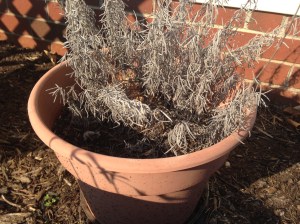
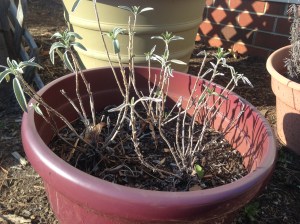
Lavender didn’t make it.
Sage is coming back.
Surprise! Potatoes from Bed 2.
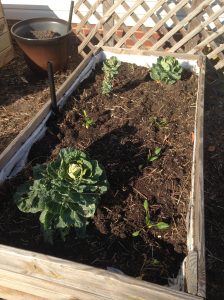
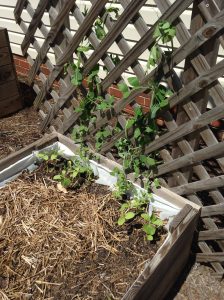
Bed 1: Brussels sprouts looking bad, added spinach and snow peas (along trellis).

March 10-20: Overnight freezing temps force me to force John to go out and cover Bed 1 with a tarp.

April 9: Plans for Expansion

I decided that my back yard is honestly just too hot and sunny for many things (tomatoes, spinach, herbs) to grow well. Things that grow with a little less attention and water (okra, zucchini) will stay and I need to figure out how best to use the rest of the space.

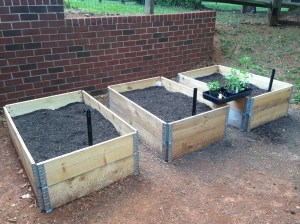
Meanwhile, I had John build me three more SIP irrigation beds on the side of the house. This area still gets a pretty good chunk of full sun during the day, but starts getting shaded by the house around 3pm, which cuts a lot of the heat. Hoping tomatoes and basil do better down here.

Beds 3, 4, & 5: plans for tomatoes.

Things volunteering from my compost pile: pumpkins (of course) potatoes, and maybe a cherry tomato (fingers crossed).

Out of three blueberries, one died. Raspberries are coming back just fine.

Moved the more visually appealing planters to the front of the house and will try to do herbs there, again. Will see if the parsley I moved inside bounces back.

April 26: After the Flood

It rained here for almost 4 days straight. Sugar snap peas have taken off. I managed to get my tomatoes in the new beds and went ahead and put cucumber just in front of the peas (so they can have the trellis when the peas are done) before the storm. Everything else just sat out until today.

Annual Tanglewood Plant Sale hit in the midst of the rain (pro-tip: it always falls on or around Earth Day) and I didn’t make in time to get my favorite “Sugary” cherry tomatoes and lavender.

Bed 1: Spinach & Cucumbers in back, spinach on right, zucchini in front.
Snow Peas (and later cucumber) on trellis.
Bed 3: Goliath tomatoes
Bed 4: Goliath Tomatoes
Bed 5: Roma in back, cherry(?) in front, Mint back left
Cherry tomato close up.
Volunteer Pumpkins
Zucchini
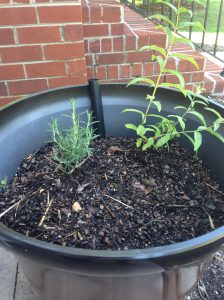
Lemon verbena and Salem rosemary.
Parsley, Asp rosemary, and dill.

Things To Think About, Things to Do:

  • add 3 blueberry
  • add 1 raspberry
  • add lavender
  • figure out a place for cantaloupe (container?)
  • add okra to Bed 2
  • root veggies between okra?
  • add trellis to front of Bed 1
  • move sage to a shadier spot
  • citronella?
  • add basil to tomato beds
  • stake and tie up raspberry
  • cover blueberry’s for birds


Garden Journal

It seems the weather has me inspired to write.

I’m keeping track of the progress of my new little hobby and writing all about it. If you want to keep up you can find my first entry here:

Garden Journal Entry #1: Container Garden Plans

I know it is dorky, but I obviously don’t care at this point. Enjoy.

Day 5: Book You Wish You Could Live In

Animal, Vegetable, Miracle by Barbara Kingsolver

I didn’t actually read this book.  It was one of the many audio books I listened to on my half-hour commute to and from work for three years.  I think it would have been a more academic read if I’d actually had the book in hand, because it is a one-year chronicle of Barbara Kingsolver and her family (writer Steven Hopp and two daughters) living as “locavores.”  Though my very infantile gardening habit currently pales in comparison to the things that Kingsolver journalistically records in this book, every once in a while I think I might attempt to expand my garden and have considered purchasing and using this book as a resource.

Essentially, they move to a farm in Virginia, and vow to only eat food that has been grown or raised within fifty miles.  They allow themselves one “luxury item” each (coffee, hot chocolate, dried fruit, and spices) and bring a few things like olive oil and certain grains which are obviously from out-of-town.  In addition to their own vast garden, they raise chickens, shop at local farmer’s markets, and trade with neighbors.  They bake their own bread, clean and eat their own turkeys and roosters, and at one point, Kingsolver begins making her own cheese, which turns into a Friday night homemade pizza tradition.

Essentially, the book reads like a personal journal slash farmer’s almanac slash foodie magazine.  It is organized chronologically and provides tons of information on growing crops, raising animals, and preparing and preserving food.  Kingsolver’s voice is periodically interrupted by short essays from Steven or one of her daughters, which provide recipes along with commentary on controversies like CAFO’s.  I loved it.

It is funny, because my husband grew up on the farm that has been in his family for four generations.  Though his experience was not one of “living off the land” in the extreme way Kingsolver describes, he can remember the rows and rows of canning jars, filled with sweet corn, pears, green beans, and homemade spaghetti sauce.  He’s talked of the dirtiest farm animals in the world (chickens), riding motorcycles at age five, making forts in the rafters of the barn, and Tony the Pony.  But then, every time I mention how fun and healthy it would be to have some land and a huge garden and animals (and eggs!) he reminds me that the life of a farmer is anything but stress-free.

In many ways, this book was like reading a real-life and modern version of Little House on the Prairie.  There is something primitive and instinctual (and probably Biblical) about the desire to grow food.  I would not consider this book a lighthearted or entertaining read, sometimes it was painfully slow.  But it was informative and interesting, and at the time, it helped me escape the condo-life I was living.  I imagined, for a little while, days full of sun and free of social media.