For about a hundred reasons, I’m a bit of a soup fiend, not the least of which is that it is cheap and easy and I can make enough to feed an army (my family), or myself for several weeks. I tend to be a soup-all-year-round kind of girl, quoting “hot soup on a hot day… something something something…” but obviously hot soup on a cold day is even better. A version of this crossed my newsfeed a few days ago and I had to laugh. Throw the words “flu-busting” on to anything and it is sure to be an Internet sensation.
I love creamy soups, but ever since we kicked milk out of our house, I am sad to admit that creamy soups no longer love me. This little magic virus cure hits the spot and doesn’t have even a drop of milk in it.
The truth is, it is just a blended vegetable soup with a distinctly Asian kick. I mean, if eating your veggies suddenly counts as flu-busting than I think we all know how far we’ve fallen as a society. Also, I say “Asian” because I’m not actually a foodie so I don’t want to claim the wrong Pacific Island with the blend of spices I added simply because they sounded good.
I could have just as soon labeled this “Leftovers Soup #7” because in the true spirit of me and soup, no shopping nor measuring was actually utilized in the crafting of what I have now called breakfast and lunch for going on four straight days.
Bonus: it can easily be vegan, if that’s your thing. Bonus two: you can definitely add some leftover meat if you have some to use up and it would probably still be yummy.
Here’s my not-so-scientific recipe:
1 onion
a bunch of cut up carrots that I did not peel
an equal amount of cut up celery
a slightly less than equal amount of cut up cauliflower
more garlic than seemed necessary
a nub of ginger
2 cans of chickpeas without the liquid
enough chicken stock to cover the veggies
1 can unsweetened coconutmilk (the secret!)
salt, pepper, turmeric (flu busting!), cayenne, curry, and coriander to taste
a hearty dollop of greencurrysauce at the end
First, sauté all the veggies until they are kind of soft and browned and mushed together in that aromatic way that your kids go, “Is something burning?” and you yell, “Get out of my kitchen!”
Next, add the chick peas and the chicken (or veggie) stock and bring to a boil. Lower the heat and cover. Go clean something. Or do a load of laundry. Or just forget about it because you can’t ruin mushy veggies.
When everything is sufficiently mush, blend it all in a blender or use an immersion blender if you are fancy. Adjust the liquid before blending for a consistency you like. I went on the thick side.
Finally, add your coconut milk and spices and stir. Taste, add some more spices, and stir some more. Top with a hearty dollop of green curry sauce, or sour cream might also be good, and a side of crusty sour dough (I know this is very un-Asian, but so yummy), and rest in the knowledge that you have successfully avoided another year of flu shots without guilt because this soup is obviously just as powerful, if not more, than modern medicine.
This post may contain affiliate links. Read my full disclosure here.
This post may contain affiliate links. Read my full disclosure here.
I had my last cup of coffee exactly one week ago Saturday.
And I have some things to say about caffeine withdrawal.
Because here’s the thing. I’m going through it. And hard. And it is awful. And it seems like I went into this idea completely ignorant of exactly how awful it was really going to be.
On the whole, I’m sitting here thinking that deciding to give up coffee, on a whim, was maybe not one of my better ideas. But I’m in it now, and there’s no going back, and so I have nothing left to do but write about it.
And maybe laugh about it later.
But probably not.
It started with this book, which I read in a total of 3 days.
I might sit down and write a more full review of it later, but suffice it to say, it was an excellent read and I do highly recommend it.
This author maps out a pretty good list of instructions to really get started, and includes a four-day-cleanse to kick things off.
Hooray!
Who doesn’t love a good skinny-white-girl detox?
Four days? Even I can do that, said me, still blissfully unaware of my caffeine dependent happiness.
A mere forty-eight hours later, I was Googling “caffeine withdrawal symptoms” and coming up very short on details concerning what in the fresh hell was happening to my brain and body.
(My brain was either imploding or physically consuming itself, and my body was perhaps suffering the secondary effects of that.)
I’m writing this post for posterity. But also for anyone who, like me, just needs some company for their misery.
Claire’s Caffeine Withdrawal Diary
Day 1: Sunday: 24 hours Without Caffeine
This is easy. No headache. No brain fog. Didn’t even crave a cup of coffee upon wake up. Made it through church on a damn bowl of fruit dressed in lemon juice and flax meal and wasn’t even abnormally hangry at 11:30, as I often am.
This is going to be easier than I thought!
Potentially related: Took a solid nap on the couch with kids running around from 1-3pm and I did not poop today.
Day 2: Monday: 4am
Awoke with a metaphorical pick-axe jammed into my left eyebrow. Blurry vision. Nausea. Hot and cold sweats. Chills. Everything in my body hurts and my hands are numb.
I stumble to the bathroom to pee and think, “I should take something for this.”
Excedrin, my go-to for this kind of headache has caffeine. Also, it has been so long since I’ve had this kind of headache that we don’t even have a single Excedrin in the house. I find a bottle of unopened Motrin and choke one down with water before returning to bed.
Guess what is the opposite of delicious before the sun comes up when all your body wants is a cup of coffee?
9am: After dropping off preschoolers, I return home and go back to bed fully clothed for 2 hours. John mentions, as I drift into my pain-induced coma, “Honey, maybe you are actually coming down with something.”
“Or maybe caffeine and crack are not-so-distant cousins and I was under the impression that I wasn’t as dependent as I apparently am. Go to hell, husband, I need to die.”
(Things I do not mean, but say anyway because it is impossible to stop myself.)
My headache alleviates from an 11 down to a manageable 6 in this time, which is enough for me to get on the Googler.
Noted: It is too late to taper off slowly, which I clearly should have done.
Noted: Headaches could last between 2 days and up to several weeks. This time span is entirely too broad, but upon seeing “irritability” further down the list, I believe I must be on the right track for diagnosis and my urge to throat punch Dr. WebMD subsides.
I take to the live-advice provider known as the Facebook Mommy Network and the consensus is to give it a full week.
Potentially related: There is a metallic taste in the back of my mouth on either side of my tongue, which feels swollen. I took another nap around 1pm and still fell asleep on the couch at 9pm. The headache fluctuated all day between a pain level of 6 and 11, and while that retched book encouraged me to eat leafy greens and more fruit, and drink lots of water, the only thing that sounded good was nothing.
I think I had some soup.
Also, I did not poop today.
Day 3: 72 hours Without Caffeine
Poop. Just before 11am.
So that’s a start.
Also, my appetite is moderately back, though because I’m doing this stupid cleanse, I don’t get to eat any of the things my body is telling me to eat, like coffee and donuts and coffee. Started the day with a smoothie because a big bowl of fruit, first thing in the morning, is difficult.
Also, I ate some form of protein every hour, on the hour, as well as three round meals as dictated by the book. I started putting fresh ginger in hot water and sipping on it throughout the day, which was weirdly satisfying on a few levels.
Headache was at a level 4 pretty much all day, though there were probably one or two moments where I wasn’t acutely aware of it.
Took a 20 minute hard power nap while the kids watched Thomas the Train. Was tired to the point of groggy all afternoon and evening. Irritability and patience levels were exactly as expected (DEFCON 2) and went to bed early again.
Potentially related: awoke at 6:30am ready to get out of bed. Of course, in that quiet half hour all I wanted was coffee, and nothing in me felt particularly good until around 9am, but I did not have the desire to keep sleeping.
Have felt mildly disconnected from reality all day and can distinctly describe a feeling of loss or emptiness. Unsatisfied. All day. It is also cold and rainy out, which doesn’t help.
I sure do miss my old friend Coffee right now, and I’m mildly in mourning.
Day 4: 96 hours Without Caffeine
Awake again before 7am, and feel rested. Still have a looming all-over pain level 3-4 headache. Have been adding turmeric to my smoothies every day for good measure. Nothing to note about that.
My bowels are finally self-regulating, a feat which I am still celebrating. It was disheartening to note that all these months of claiming magnesium as my newfound best intestinal friend, and I was completely ignorant of the help it was receiving from coffee.
I have to pause here and apologize about all this poop-talk, but here’s the thing: it is one of the best methods for measuring our overall health. As a mom I quickly learned that poop is a singular sign that anything is amiss with a baby who cannot speak, and the quicker I got over my Western fear of toilet bowl analysis, the sooner I started revolving meals around foods that seemed to be optimally healthy for my kids.
Admit it, young parents. You talk about poop far more now than you ever have in your entire lives.
If this is a regular measurement for the health of our kids, why don’t we use it on ourselves?
I went to the gym twice today. (This is strange by itself and unrelated to coffee.) I did a moderate weight routine in the morning, and later took a Pure Barre class that just happens to meet when my big girls are at piano down the road.
Felt fine through both, but the headache still has not gone away completely.
Drinking water is getting easier. Naps are not going anywhere.
Irritability is decreasing. I’m still sad and missing coffee and was advised to create a new routine that revolves around some really good tea. I’m having a hard time imagining such a thing even exists.
Four-day-cleanse technically ends today so I indulged in a ceremonial epsom salt bath, which was wonderful (as always) but did in fact bump my headache level up a notch.
Potentially related: I’m sleeping like a damn baby, and that is a feat in and of itself. Ever since having kids, I went from being able to fall asleep in my freshman dorm room at 10:30pm, still full of people and lights, and sleep through all the fun, to waking at the sound of a sneeze from an entire floor and two closed doors away.
Add to this sensitivity a husband whose resting body temperature hovers right around 200 degrees fahrenheit, sciatica, three kids who sometimes talk in their sleep, and one kid who continues to suffer from occasional “night terrors” and you can understand why I feel justified in sleeping until 10am every Saturday if I want.
And I do.
Day 7: Saturday
Though technically the cleanse is over, I’m not about to reintroduce coffee after suffering for 96 hours and not yet experiencing the supposed bliss at the end of the rainbow. And so I continue with this cleaner eating approach and no caffeine.
Days 5 and 6 blurred into each other and were much the same as day 4, with the exception that I did not take a nap and was able to stay awake until close to 11pm.
Today was by far the best day yet, though I can’t say I’m completely headache free.
I’m going to try to stick this out until I feel awesome or until I give up, whichever comes first.
Final Thoughts:
I did not realize how much caffeine affects me as I never considered myself a heavy coffee drinker. And it is true, I only drink up to 16oz a day, and not even that much every day.
Also, I cannot consume coffee after 1pm and expect to fall asleep at a reasonable time, so I’ve been pretty good to completely cut myself off before lunch.
But.
We do like our coffee strong.
And, I’ve been doing this for almost 2 decades.
I’ve said it before and I’ll say it again, I’m not one for extreme habit changes as I find them to be mostly unsustainable. I’m not hoping that my life going forward is forever coffee-free.
But I could be sold for some better sleep. At this point, it is difficult to target if the improved sleep is related to the lack of caffeine or the lack of sugar in my diet, as I’ve cut out all refined carbs and all desserts this week.
I’m going to keep going. And you know I’m usually good about reporting back.
In the meantime, if you’ve stumbled here via random headache-induced Google search, feel free to leave me a comment. I promise to update when I can claim a day completely free of anything that even resembles a headache.
This post may contain affiliate links. Read my full disclosure here.
The Short Story
The older I get, the more I realize how common hormone-induced depression and anxiety are in women my age. It is something seemingly everyone is affected by, but very few are talking about. While prescription medications are at an all time high and largely working for many people, I found that they were not ideal for me. This is why I continue to be on a quest to treat my mental and emotional health with as many natural solutions as possible.
The Long Story
I have been medically treated for depression exactly three times in my life. Six months after my first daughter was born, I finally sought help for demonic psychosis what was ultimately diagnosed as postpartum depression. I was prescribed Celexa over the phone and took it until Eliott was a year old.
Three years later my second daughter was born. My doctor thought it best to preemptively strike against a recurrence of postpartum depression, and put me on a low dose of Zoloft. I’m guessing it was effective; I never experienced any depression symptoms.
My third child was a very large, very chill, and very sleepy baby boy. Though my husband claims I still had a mild amount of hormonal lows, I was not even close to thinking I was, again, at a point of needing medication, and remember that first year of my son’s life as relatively peaceful.
Then, I got pregnant with my final child, another girl. Long before we even knew her gender, I was becoming that raging version of myself who couldn’t get the house clean enough, couldn’t love any of my offspring even a little bit, and wanted to take out all of my (nonsensical) fear and aggression on the only other adult presence in my life, which was my innocent husband. This time, the diagnosis was “prenatal depression” and I was once again put on a very low dose of Zoloft.
Telling people I was treated for postpartum depression has become easy. In fact, I realize more and more just how common it is. But somehow, admitting I continue to suffer from extreme mood swings related to PMS is a lot harder.
I would guess that the ratio of women suffering like me, to those admitting it in public, is low. And it makes sense. I know I certainly don’t want to be the suburban, stay-at-home, minivan-driving, housekeeper-employing, mother-of-four-planned-children who admits to having full blown breakdowns (even now, a few times a year) for reasons that seem beyond my control. I am a healthy person. I eat well and take care of my body. I am confident and secure in my spiritual faith. My personal relationships, family support, and marriage are unusually good compared to many others.
It’s embarrassing to have the life I have, with all of its relative freedom from basic hardship, and yet have full days of mental and physical debilitation that render me mostly useless, angry, and ashamed.
Depression, Anxiety, and Hormones
What kind of symptoms am I talking about here? Mine have included in a range of severity, the following: anger, rage, uncontrollable desire to have my house or my space suddenly spotless, insecurity, panic attacks complete with what could be described as having a mild heart attack, lack of libido, hot sweats, sugar cravings, lack of appetite and extreme weight loss (also weird because I’m already quite thin), lack of desire to do fun things, inability to laugh at actual funny things, lack of desire to make other people laugh (which is kind of my MO), general negativity, migraines, inability to sleep, exhaustion, general lack of energy, hair-trigger temper, impatience (which is especially weird for me), forgetfulness, inability to focus or to feel like I can get my shit together on an average day, lots of yelling and cursing to get my point across, crying for seemingly valid but actually kind of embarrassing reasons, feelings like no one understands me, feeling like no one is listening to me, feeling like no one can possibly understand how I’m feeling.
While I know this isn’t true for all 40 million adults in the US who are currently being treated for some form of an anxiety disorder, I can say for myself that hormones are the driving cause of all these problems. In the last decade, my very worst symptoms of depression and/or anxiety were most prevalent while I was on birth control, pregnant, nursing, ovulating, or about to start my period. (That’s right, if you do the math, in the last 10 years I’ve had about 600 good days.)
Something had to give.
Treating Depression and Anxiety with Medication
I didn’t really understand the full scope of chemical/hormonal imbalance until I experienced it personally. I admit I was always one of those glass-is-half-full people who looked at depression as a sign of weakness, hidden skeletons, or laziness.
I couldn’t really have been more wrong.
Maybe this is why it is difficult to admit it now affects me.
I’m not one of those people who is against modern medicine as a general rule. I vaccinate my kids, I take Excedrin for headaches, and have been known to pop Benadryl as a sleep aid. Also, I have been in very close communication with my current doctor about the full spectrum of my mental and physical health.
But here’s the thing: I did not like being on antidepressants.
Don’t get me wrong, when things were at the absolute worst, the side-effects of selective serotonin re-uptake inhibitors (SSRi’s) were preferable to the lack of control I felt without them, and so I considered the drugs to be a necessary short-term solution. It was truly one of those times when the rewards outweighed the side-effects.
But the list of negative side-effects I experienced while taking an SSRI is long. I had no emotions. I remember watching a class full of high school freshman blatantly disrespect me and each other and experienced exactly zero desire to stop them. (In fact, I remember telling them this, and verbalizing how strange it was that I did not couldn’t even make myself care.) I was devoid of normal human emotional response, something that is typically heightened with pregnancy and childbirth. I would say that I missed having hearty belly laughs and tears when appropriate, but another side-effect of the drugs is that I was aware they were gone and I didn’t care. Some of you will appreciate that I had turned off Dexter after the baby/blood season 4 finale, but was later able to restart and finish out the entire series while I was on Zoloft.
Because nothing bothered me. At all.
I didn’t like the bland taste of food. I know many women who hate antidepressants because of weight gain. I was the opposite. I was never hungry, and when I logically knew it was time to eat, nothing sounded good. I put extra salt on everything and was forever apologizing that dinner tasted so bland. (John thought I was crazy.)
I didn’t like restless leg syndrome nor my sudden inability to fall asleep. This is actually the reason I discovered magnesium supplements and am thankful for that, but being exhausted and not being able to sleep might be the most torturous feeling in the universe.
Why I’m Talking About All This, Now
I cannot even count the number of times I’ve connected with both friends and strangers over these mutual feelings of helplessness and the desire to “feel better” without medication. Most of us are between the ages of 25 and 50. Most of us remember a time when we felt good. And all of us just want to feel good again.
I simply cannot fathom that living like this is a new normal that I’m just supposed to accept. Even if I could live like this, it isn’t fair to my husband and children. I hope other women (especially moms) won’t accept it either.
So this entire post comes across a little abruptly, despite the length, and I realize to some friends and family who regularly follow my blog, much of it might be cause for alarm.
Do not be alarmed.
The truth is, things are good.
I have made some habit changes that are noticeably making a difference in how I feel, day-to-day, and month-to-month. Some are no big deal. Others require a little effort. But all of them are well worth how much better I’m feeling. If you are interested to see what I do, you can read all about it here.
For the Mamas of Little Ones
Truth: It took my body a full two years after pregnancy (because I was nursing?) to start really feeling normal again, and getting there has been a slow but steady process.
Truth: Having small kids at home is exhausting, even with balanced hormones. Daily stress for the mother of young kids is no joke. This is true for stay-at-home moms. This is true for working moms. This is true for single moms. This is true for moms who married Superman.
Truth: I am with you. It is difficult to admit that something I outweigh by more than 100 pounds and outsmart by more than 23 years is getting the better of me. Regularly. Times four.
If you are stuck in toddler-land, or colic-land, or the land where sleep simply doesn’t exist for anyone, than hear me say this: I enjoy my children more and more as they get older. Ignoring for a moment the fact that all of my spawn are genetic clones of John and me, I believe these young-years are difficult, largely, because we’re doing things right. And I believe that what I’m doing now, is going to make the teenage years preferable to the toddler years, despite what the majority of the population wants to tell me.
I also believe I deserve to feel good and to be able to offer my family my best.
And so I’m working on it. Healthy habits for myself, healthy communication with my spouse and kids, and now, sharing a few of the things that are working for me with you.
Join the Discussion
Please comment below. Please share this post with those who might need it. Please keep up the dialogue with those who love you. Talking leads to action. If you know me in real life, contact me. I’m wide open.
This post may contain affiliate links. Read my full disclosure here.
I should probably say from the very outset that I am 36 years old and I do not currently struggle with maintaining my weight. I am one of those genetic freaks who was given a free pass to largely eat whatever I want for most of my life, and remain relatively skinny.
I apologize about that in advance.
That said, I do not just eat whatever I want.
Food trends intrigue me.
The popularity of Whole30 caught my attention more than a year ago, when several friends and bloggers I follow began talking about it, posting food pictures, joining support groups, and generally blowing it up.
So I read about it. Extensively. I toyed with the idea of how difficult the transition would be from the way we currently eat.
I talked to several friends who enthusiastically started a Whole30. I can only think of one who actually finished it. She said she was mostly miserable for the first two weeks. She confirmed it was terribly expensive and time consuming throughout the month. Also, she said she got really burnt out on trying to come up with new things to eat because she was sick of most foods by about day 10. On the plus side, she did lose a little weight, noticeably improved her running performance, and reported noticeably diminished PMS symptoms for that month.
But I’m not sure I’m going to even try. And here’s why:
1. Cheese.
2. I do not love to cook.
3. I do not love to meal-plan.
4. I’m cheap.
5. The “h” in ghee.
6. Making grocery lists that force me to use the word “compliant.”
7. Separate meals for the normal eaters in my house.
8. Sweet potatoes more than once a week.
9. Finding a 30-day span in the year that is mostly free of life.
10. Kombucha as dessert.
11. Hanger. (For days, apparently.)
Hanger: A lethal combination of hunger and anger, the result of waiting so long to eat that your blood sugar drops to dangerously low levels, impairing both your mood and your judgment. Particularly manifests itself when you are with a significant other and trying to make decisions about where to eat now that you’re both starving.
Here’s the thing. I am an above-average healthy eater. And while I could definitely find areas for improvement, I’ve never found drastic transitions in major life habits to be sustainable.
[clickToTweet tweet=”I’ve never found drastic transitions in major life habits to be sustainable. https://wp.me/p8oN62-16Q” quote=”I’ve never found drastic transitions in major life habits to be sustainable. ” theme=”style6″]
Neither have my friends who tried Whole30 and failed.
Basically, I already have my thing and it seems to be working. The thing about my thing is that it isn’t all that complicated.
What I Don’t Do
– Eat Out because it is Convenient –
Like, ever. Fast food is an absolute last resort, reserved most often for traveling.
– Stock My Pantry with Snack Foods – I only buy one kind of chip and that is tortilla chips. I rarely buy sugary cereals and honestly, only buy cereal when it is an especially good deal. Holidays are the only times we have candy in the house and most of it comes in the form of gifts. The thing is, when it isn’t available, it is impossible to cave. Meanwhile, if I was into buying Cheetos, I promise you I’d be going through at least two bags a week all by myself.
– Stock My Freezer with Store-Bought Ready-Made Meals –
Same concept as eating out.
Eating-out or ordering-in: definitely a treat.
What We Do
– Eat Together as a Family Most Nights of the Week – At a table. Without interruptions, devices, or the TV on.
– Plan for Busy Nights –
My kids are still relatively young and extra-curriculars don’t have us in the car most evenings. But during the school year, we do have dinner-time interruptions 2-3 days a week. I plan for them. Sometimes I pack a picnic dinner and take a blanket to the soccer field. Other times (most times) I make something in the crock pot that will be ready for us when we get home.
Eating out is expensive, everyone knows that. But I would submit that even when we can afford to pay for it, we can’t afford to pay for what it does to our health.
St. Patrick’s Day practically cooks itself.
– Eat Meals High in Protein and Low in Starchy Sides –
We frequently eat grilled chicken, steak, or pork chops on top of a large salad. Even my kids eat and love this dinner. I’ve also replaced a lot of the pasta, potato, and bread sides with things like beans, squash, sweet potatoes, and rice. Dinner prep is especially easy in summer time when produce is fresh, abundant, and much of it pretty delicious uncooked. I should add that I’m not above adding fruit to my table at every single meal if I can help it.
Blueberry + Beet + Banana Smoothie: better than a juice cleanse.
– Portion Control –
A large part of eating well includes getting out of the habit of over-eating, which I didn’t really figure out until I was about 25. This is the very reason I didn’t lose a single pound when I trained for and ran my first marathon at the age of 21. (I was also 20 pounds heavier that year than I am right now, after having 4 kids, if you can believe it.)
Portion control is something I’ve learned as an adult, and while I’m trying to teach my children the basic concept, I’m also aware that the very act of growing is enough to cause them to out-eat me at a rate of about 3:1. It’s not something I necessarily harp on, but when my kids say they are “still hungry” for more salty dark meat chicken and BBQ sauce, I almost always make them eat something like more carrots first to see if they really are hungry.
Homemade Salsa & Pico de Gallo
– Kid-Friendly Sides –
I’m going to admit right now that I cook and eat healthy predominantly for my husband and myself. But we’ve never been the kind of parents who cater in any capacity to our children. For the record, I would absolutely say that “my children are picky eaters” because I believe if we let them, ALL children would be picky eaters. But it turns out we have mastered the art of getting our kids to eat just about anything, and eat all of it. It is amazing what kids will do when they are hungry enough.
Beet greens with tuna, breakfast burritos, bone broth, spinach and fried egg.
This means they eat what we eat, and they aren’t given a lot of alternative options. I’m not a short order cook and my kitchen is not a Luby’s Cafeteria. Also, no one-bite rule in this house. If you can’t finish your dinner you do not get dessert. Period end of story. And some nights, even though everyone ate everything and then some, dessert is not on the menu.
But I don’t have to explain to any parents my age how hard it is to maintain healthy eating habits with children. We are all busy. We are all also wired to love sugar and salt. This is a dangerous combination. If I fed my kids hot dogs and apple juice for lunch every day, it would be very difficult for me to get them to eat grilled chicken breasts and salad for dinner.
There has to be a balance.
My kids are not deprived of hot dogs, macaroni and cheese, pizza, or fish sticks. And this mama is not above at least one quick-and-easy dinner a week. But you must understand that this is not the go-to in our house. It is the exception rather than the rule. And as such, my kids treat it like a treat.
– Drink Water with Every Meal –
No soda. No juice. No sweet tea. No milk. No dairy-free milk substitute.
– Freeze My Own Leftovers –
Cooking once but eating twice? Yes, please. This is kind of the extent of my “long-range” meal planning and it might be the smartest habit change I’ve made in the last year.
Convenience can be healthy.
Healthy Habits Beat Diets and Fads
Overall, I am sure the reason so many people fail at their attempt to stick with Whole30 for the entire 30 days, is due to the fact that it is such a drastic change from their norm. (Nearly everyone reports that eating out on the Whole30 Diet is virtually impossible, and I believe it.)
Everyone knows how hard it is to implement a new routine. I am a huge fan of setting small achievable goals. Believe it or not, success begets more success.
Maybe this means swapping one meal out for one meal in each week, and gradually increasing that number. Maybe it means refusing to purchase one or two junk food vices at the grocery store, until you’ve successfully rid your pantry of all of them. Maybe it means preparing double portions of dinner so you don’t need to run to Jimmy Johns the next day for lunch.
Whatever it is, I’m simply saying that it doesn’t have to be huge to make a huge difference.
And that’s why I don’t really have a desire to do Whole 30.
Before reading any further, you should be warned that I am not a doctor nor a medical professional. The following is merely a woman-to-woman account of a few things that are currently helping me ease symptoms of monthly depression and anxiety. Like anything else you read on the Internet, be advised to speak with your own medical professional instead of self-diagnosing and embarking on Internet driven mental health treatment. Links to my preferred brands are included where applicable. To read the story behind my desire to find natural solutions to my emotional health, click here.
Treating Anxiety and Depression without Medication
I have always been willing to do whatever is the healthiest solution for my mental and physical well being at any given time. But I believe I am living in a place and time where healthiest is too often replaced with easiest.
Generally speaking, I am successfully managing hormone-related mood swings through these 6 habits: eating right, taking supplements, exercising, avoiding birth control, inversion, and chiropractic care.
The following might not be easy, but it is working.
1. My Diet
– High protein. High fiber. Lots of fresh veggies and fruit.
– Limited sugar. 2 weeks of detoxing finally ended my sugar cravings.
– Limited alcohol.
– 16oz coffee with half and half every morning.
– 16oz Green Tea or Red Raspberry Leaf tea mixed with kombucha every afternoon.
Cold oats, fresh berries, cashew milk, coffee.Garden fresh tomatoes and basil with mozzarella cheese and blueberries.
2. Supplements I Take
– Magnesium: 500mg, before bed.
– Vitamin D: 5000, before bed, except during summer.
– Fish Oil, before bed.
– Iron + vitamin B complex/vitamin C: taken together after lunch.
NOTES: Magnesium has a physical-relaxation effect, which is why I take it before bed. (It was first recommended to me for restless leg syndrome and helped.) A side benefit is extreme bowel regularity. I experienced mild diarrhea for the first two weeks, but that was it. My bowels returned to a new and very healthy normal. I only take vitamin D in the months I am not outside in the sun for at least an hour a day. There is an obvious difference in my mood from summer to winter, and low vitamin D is a main culprit. I take iron because I am anemic; anemia causes extreme fatigue and brain fog. Iron is best absorbed with vitamin C and cannot be absorbed with calcium. Taking this with my B complex at about 2 o’clock actually helps me avoid that mid-afternoon desire to take a nap. Both are energy boosting, and therefore mood boosting.
This is what I’ve been using for years with noticeable positive effects. You don’t have to break the bank to feel better.
3. My Work Outs
– Low cardio + low weights, 3 days a week.
– Get outside whenever possible.
– Yoga and/or serious stretching.
NOTES: I’ve always been relatively active and regular about workouts. But hard workouts for me spike cortisol and actual make me angry in addition to ridiculously tired. Adding full-body low weights back into my normal routine actually provides that endorphin rush that I do not get from running, and it sticks with me through most of the day. I also incorporate quite a bit of yoga and stretching to help release toxins and reduce low back pain. A side benefit is that the slowing down and concentration on deep breathing of course creates lasting mental relaxation. This is one that was slow at first, but actually gets better with more practice.
Inversion doesn’t have to be complicated.Pushing through morning migraines by getting my blood flowing.
4. Going Birth-Control Free
– Creighton Model of NFP.
– Track my cycle with FLO period app.
Notes: I should have listed this first, because I believe it is the best habit change I’ve made in the last 5 years. I am lucky to be married to a man who was willing to take on the responsibility of permanent birth control now that we are done having kids, but I wish I’d known as a newly wed how many terrible side-effects come with all forms of hormonal birth control. And believe me. I tried several. Letting my body and my cycle reset (amidst 8 years of pregnancy/nursing) seems to be one thing that also grows noticeably better by the day. I would say it took a full 2 years after weaning to begin feeling more like myself. It is truly no joke, what our awesome bodies go through in the name of procreation. I continue to track my cycle now because knowledge, for me, is power. It is so helpful for me to see, based on patterns in my cycle, that my mood is nearly always directly related to a hormone shift. //pagead2.googlesyndication.com/pagead/js/adsbygoogle.js
– Head and/or handstands incorporated into workouts.
– Yoga inversion poses.
– Inversion Table.
NOTE: bear with me, this is a weird one. I stole my parent’s inversion table several years ago to help alleviate lower back pain, and discovered that hanging upside down for a mere 12 minutes a day, a few days a week, actually relaxed me as much as a hot bath. If you can afford the table, do it. If you cannot, go ahead and be that freak at the gym doing handstands against the wall. I promise you, as weird as it sounds, it is another habit that I cannot give up. It is a slow process, but like everything else, the more I do it, the quicker I feel the positive effects.
6. Regular Chiropractic Care
NOTES: I found my chiropractor here in Clemmons when I was pregnant with my 4th child and barely walking due to pain. Regular adjustments throughout that pregnancy kept me on my feet and relatively pain free. I have continued, in the last 3 years, to receive monthly maintenance for pain, but here again, a side-benefit I always notice, is that in the days following an adjustment I’m more clear-headed, I sleep better, and my mood generally improves.
7. Acupuncture – and Incorporation of Chinese Medicinal Principles
NOTES: Started in June of 2018 – okay so this one is the most recent change and I’m still too new to be able to write about it in depth but plan to eventually. Basically, I am seeing a Master of Acupuncture and Oriental Medicine to tackle all of the issues I’ve written about in this and other posts, as well as address what has become somewhat persistent tinnitus. It turns out, everything that is going on is happening in my liver, so that is what he is focusing on getting back in balance. I cannot yet speak to any sense of long term healing I’ve experienced, but I have absolutely noticed a difference in how I feel immediately following a session with needles. I’m also now taking some herbs. Again, will update this when I have better info. For now, I’m on board to see this out because I truly believe it is going to help.
Recommended Reading
To learn more about managing hormone imbalance, PMS, PMDD, anxiety, and depression, I have read and highly recommend the following books.
This post may contain affiliate links. Read my full disclosure here.
So one of the reasons (the reason) May was the month from hell was the moment I discovered we had head lice.
It started a couple of weeks earlier, with Eliott and Carter both complaining of itchy heads.
Now. Okay. Duh. We’ve been in elementary school long enough to know that an itchy head always means “Check for lice.” And I have in the past. And I did this time. More than once. And because I had no idea what I was looking for, I didn’t see anything.
Instead, I took to the biggest mom group I belong to on Facebook and posted:
In my defense, several people agreed that Tresseme had been an itch-inducing product for them as well. And several after that recommended Dove and various other brands with tea tree oil in the ingredients. Clearly, this was a discussion of scalp itch caused by a particular product. When one mom sort of self-righteously added, “Check for lice [grimacing face emoji],” I couldn’t even type the appropriate words to convey my annoyance. Instead, I forum-slapped her with the eggplant emoji.
Hindsight.
In my defense, again, I was under some serious pedicure-induced relaxation, and thought I could start a new Internet revolution by which the supremely arbitrary and far under-utilized eggplant emoji would become, for me, a symbol to represent my inability to politely express a “Nobody asked you,” or maybe, “Nobody likes you,” or simply, “Can you even read?”
You know. The kinds of things I could also never say to my students, but sure wouldn’t have minded a real life actual eggplant to smack them over the head with whenever one of many inane comments escaped through their little pie holes.
The most inside of inside jokes, if you will, until some magical moment when I would Instagram-slap one on The Fat Jewish and he would make it go viral.
For good measure, I went ahead and eggplant emoji’ed a few more posts, some friends, some strangers. I fired off my own self-righteous text informing John of my genius plan. His response led me to Urban Dictionary.
Turns out, the eggplant emoji has already been taken.
Meanwhile, in itchy-head land, my oldest daughter finally pinpointed the problem when, in the middle of the living room, she stuck a lone finger up to her scalp, scratched a few times, and then put her fingernail up to my face and announced, “Mommy. Every time I scratch my head I find one of these little bugs.”
Somebody go ahead and kill me with an eggplant right now.
Photo of single louse: brace yourself, the first time is difficult.
A few facts about head lice:
Lice are tiny. Lice are supremely tiny.
Lice are almost translucent in color.
Lice do not like the light, so when you shine a big bright light over the affected head, they are most likely crawling out of its glare.
Lice Removal Step 1: Frantically Phone an Experienced Friend
When it comes to lice, there is strength in numbers and absolute misery loves company.
I immediately sent a frantic text to a dear friend, in search of the phone number of a woman who had done a head lice presentation at a MOMS group I once attended. Instead of forwarding me contact info, she immediately called saying she just got rid of lice in her house and she would be over after dinner. In the meantime, she urged me to run to Ulta and buy this:
This kit is $30 (well spent) at Ulta, but click the picture above for a cheaper price through Amazon and karmically prevent yourself from ever having to use it.
Can I just take yet another side tangent here to dwell for a moment on the kind of friendships that result in a lice combing party on your back porch on a Friday night after dinner?
Rare friendships, people.
Really rare friendships.
Amidst what might have otherwise been one of the more traumatizing events of my adult life, a voice of calm descended upon my house. This friend (we will call her Jessica) came armed with an extra nit-comb, disposable hair bands, a magnifying glass, and that no-nonsense attitude of experience that put me at ease. She then went through each kid’s head and pointed out what I had missed the first time. She also assured me that all of my reactions were completely normal and it would get better very soon.
It turns out, two out of four children had a mild to moderate infestation. One was virtually clear of all bugs and nits, but we shaved his head anyway. The fourth I cannot remember, but remained 100% clear after treatment that first night.
How To Identify Lice In Your Kid’s Hair
Look for the little eggs (called nits) not the bugs themselves.
Lice nits are the size of a pinhead and located directly on the hair usually a quarter of an inch away from the scalp.
Lice nits are sort of translucent. On dark hair they appear white. On a white napkin they appear pinkish, brownish, burnt orange-ish, or see through.
Lice nits are typically most abundant along the part, behind the ears, and along the back of the hairline.
Lice nits are very sticky, so if you find one and try to pick it out, odds are you will not be successful with your fingers alone.
That is pretty much it, honestly. If you have nits, you have bugs. If eggplant lady would have said “Check for lice eggs,” I would have been fine. If you can see physical bugs (say, the size of a sesame seed like the one Eliott thrust upon me) you’ve probably let the lice live there a lot longer than you ever wanted to. Go ahead and wear that Mother Of The Year crown with pride. In fact, you can borrow mine.
Lice Removal Step Two: Pour Yourself a Big Glass of [Insert Beverage of Choice Here]
You are about to do more laundry than you have in an entire year, but instead of cursing the work, you could, like me, drink-up and take this as a much-needed kick in the pants to get started on that semi-annual deep clean. I’m talking all bedding down to the mattress, all towels, all coats, jackets, backpacks, and anything else made from cloth that could have come in contact with your child’s head.
Also, prepare yourself for tears as all the Lovie’s get quarantined in sealed plastic bags for an unknown amount of time. (We were probably over-cautious but we left all the stuffed animals and anything that could not be washed sealed in the attic until we had gone an entire week of finding nothing on the affected heads.)
Then, I went through all the drawers in all the bathrooms and threw away all our brushes and hair ties. Not that you need any more visuals, but I actually found dead bugs in the white plastic containers that hold the girls’ brushes in their drawer. While I am unsure of how we contracted lice in the first place, I am positive one child spread it to her sister through the close contact (and sharing) of hair brushes. My kids also frequently use my hairbrush.
I boiled our wide toothed combs (for good measure) and hung on to them so we had something for tangles in the upcoming week of lice treatment. I continued to boil combs and plastic hair clips every other night or so until we were completely lice free. I did not continue to change the sheets every night, but I did change the pillow cases frequently.
Like I said, drink up. It is a lot of work.
Lice Removal Step Three: Avoiding Shaved Heads
Eliott and Isaiah were blessed with their mama’s thick locks, and Eliott’s hair is also rather long. Carter and Avery both have much thinner, finer, and lighter hair. I’m not sure at this point who was easiest. All of it was a big huge pain.
Section hair and comb in various directions with The Terminator.
The Fairy Tales Lice Survival Kit happens to be an all natural treatment. Not that I was against using chemicals if need be, I simply got this because my friend said it worked. The key ingredients are essential oils, namely: tea tree oil (melaleuca), rosemary oil, citronella, cinnamon, and peppermint oil. I actually had tea tree, rosemary, and peppermint oils on hand anyway, so I proceeded to diffuse them, and also made a room and pillow spray out of them, which doubled as a hair treatment when my Fairy Tales ran out. The kit contains a mousse conditioning treatment, a daily leave-in conditioner spray, a fine-toothed nit-comb called “The Terminator,” and one plastic hair clip. Do yourself a favor and go buy 10 more plastic hair clips.
That first night on the porch we went through the following steps with each kid.
Dampen hair with water.
Divide hair into 4 or 6 sections.
Massage mousse thoroughly into each section and clip in a bun. This is the stuff that will break down the nit glue and allow you to comb out the eggs that are stuck to the hair shafts.
Wait 20 minutes.
Spray one section of hair with the conditioning spray. Use The Terminator to comb through the section slowly, wiping the comb on a paper towel after each pass. Here, it might be important to be warned that what comes out of the comb on that first night might make you add a Xanax to that bubbly you just poured. That said, this was by far the very worst of it and I promise that you too will develop the Zen of my friend “Jessica” once the entire process is over. I got there. Eventually.
Be sure to comb each section of hair in several different directions then re-clip the finished section to get it out of the way and move on to another section. Repeat steps 5 & 6 until you’ve combed through all the hair.
Rinse (but do not shampoo) hair.
After that first night of treatment you may or may not need to ever use the mousse again. John and I set aside 30 minutes each night to go through the girls’ hair with just the conditioning spray and The Terminator after their baths each night. We pledged to do this until we had gone a solid week without finding anything.
Father of the year, right here.
I will admit here that the epidemic lasted 2 full weeks for us. While Eliott’s thick hair took the longest to comb through, nit removal was much more effective than on Carter’s very thin hair. I eventually started cutting out individual hairs with baby fingernail scissors every time I found a nit. Because in the two weeks of combing, we would have nights of finding nothing followed by nights of finding just one or two nits, or just one small bug. It was discouraging, but it ceased to be gross.
[clickToTweet tweet=”When all other lice-removal methods seemed to be taking too long, I broke out my Chi hair straightener.” quote=”When all other lice-removal methods seemed to be taking too long, I broke out my Chi hair straightener. I figured it couldn’t hurt to burn the lice and the eggs. This was successful in more ways than one. “]
Because here’s the magical thing about getting lice. Now that we’ve had it, I realize that it just isn’t that big of a deal. Honestly, like a virus, I believe it is truly most contagious before you know you’ve got it. Once you begin treatment, it is under control. I never had a single bug or single egg in my very long hair. I know because my dreamy-lover-husband checked me every night. Avery never had a single bug or a single egg after the very first night. Honestly, the time factor infinitely outweighed the ick-factor.
Husband of the year, right here.
For several years, I dreaded lice like I might dread leprosy if I was visiting the poorest streets of India. And for that matter, I think most of polite society mildly treats the threat of lice as though it is leprosy. Socially speaking, it is one of those things you don’t really want to talk about until it is over. But knowledge and experience, in this instance, made the experience worth it for me.
Like my friend Jessica, I do feel like I could help someone else now that I’ve done it. I also feel like the next time I hear about it, I don’t need to freak out and keep my kids home from school. And if you are wondering how the girls reacted, well, to them it was nothing. I did inform the school that we had been treating the girls over the weekend, and they were sent to the office first thing Monday morning to be checked by the nurse, who declared them to have “some of the cleanest scalps” she had ever seen.
What I didn’t know was that there had been more than one outbreak of lice in the school over the last two years and both my kids had been taken with their class to do group head checks in the gym on more than one occasion. These kids treat it like a fire drill. Because of this, Eliott was perfectly aware that she was the only kid in her 4th grade class who had not had lice yet, and she actually seemed a little relieved to finally be part of the club.
And it is an exclusive club indeed.
This post may contain affiliate links. Read my full disclosure here.
When I was in high school, like many others, I suffered from palmer warts. These are small warts that typically show up on hands and fingers (occasionally feet). They are gross and unsightly but generally harmless. Mine were always on my hands and I typically only had one at a time. My mom repeatedly scheduled appointments at the dermatologist, where I’d sit in the blue chair and watch as he froze them off with liquid nitrogen.
The process was generally painless in the office, but the resulting blister was often tender and even grosser than the wart itself. Because mine were always on my hands, bandaids were particularly difficult to keep on. Once removed, I’d be wart free for a few months, but then they’d generally come back to the exact same spot.
It was during the winter of my senior year when one afternoon at cheerleading practice, a teammate noticed one on my hand and freaked out, worried that if she touched my wart, she’d get one too. (No one said cheerleaders are known for their brains.) Though I calmly explained it was a virus that does not spread to someone else through touch, she continued on her obnoxious rant and refused to touch me.
That’s when my coach told me about her grandmother’s “wart juice.” She got very excited and started talking about how her grandmother makes this “weird mushroom tea” that “gets rid of warts” and “actually works.” She had no idea what it was, what it was called, or how it worked. She simply knew that it had rid her entire extended family (of trolls apparently) of all their warts, for life.
Well I didn’t need convincing. I was ready to try anything.
The next day she brought me a sun tea container full of a light orange liquid and instructed me to store it in my fridge and drink about 4oz a day.
My mom made me put it in the garage refrigerator, and I diligently went out every morning with my Dixie cup and had my shot of wart juice. It was a little sweet, but also distinctly tart like vinegar. It wasn’t the worst thing in the world, but wasn’t something I’d drink by the glassful.
Within three weeks, my wart was gone. It didn’t dry up and fall off or anything. In fact, it sort of just shriveled up over the next few days growing smaller and smaller until it was gone.
I’ve never had another wart since.
Health Benefits of Drinking Kombucha
It wasn’t until many years later that I learned the Magic Wart Juice was actually kombucha tea. Sometimes called kombucha Mushroom Tea, this ancient Chinese elixir has actually been around for centuries, known in Eastern medicine as the “Elixir of Life.”
So what is it about this stuff that makes it get rid of warts? Kombucha is basically a yeast and the tea is made from a symbiotic colony of bacteria and yeast (this is the starter – also known as the “mother” or a SCOBY). Kombucha tea is made from combining a SCOBY with a strong and sweet tea (black tea with sugar is most common) and allowing it to sit in a dark warm place to ferment. As it sits, the SCOBY uses the sugar in the tea and turns it into vinegar.
A well made Kombucha tea will contain alcohol, vinegar, B vitamins, glucosamine, caffeine, and other substances which are thought to provide health benefits. Though there is no significant scientific evidence to support any claims, those who consume Kombucha tea do so for its antioxidant, antibacterial, and probiotic properties.
I can personally testify to its wart removal powers, however, there are many other reasons people believe Kombucha tea to truly be an elixir of life. As a powerful anti-oxidant, many drink the tea as a form of cancer prevention, an aid in diet and weight loss, and as a method to boost energy. There are those who also claim it has powerful mood stabilizing effects and works in the treatment of PMS.
As an antibiotic, many use the tea to boost immune health and raise their dosage during times of sickness. Others apply it directly to the skin to treat burns, scrapes, and pain.
As a probiotic, some believe Kombucha is more effective than over-the-counter treatments for urinary tract infections and yeast infections, and this one I can also attest to. I haven’t had a yeast infection in probably five years, which is how long I’ve been regularly drinking this stuff again since high school. It is also said to simply aid in digestion thereby causing all the wonderful benefits that come with that.
Finally, because it contains glucosamines, there are those who drink it to treat joint pain and arthritis.
Brewing Your Own Kombucha At Home
Ten years ago, I moved to North Carolina and met the man who would very quickly become my husband. We started dating at the same time he transitioned from a job at a wilderness camp to a full time math teaching position. He quit smoking (for me) and was trying to stop chewing tobacco. His sleep habits were less than regular, he prepared meals very much in a single bachelor tradition (as in, pizza and beer were considered food groups), and he noticed he was not only feeling unhealthy, but putting on weight as well.
Go figure.
Then, he got a wart on his hand. (If you were unaware, palmer and plantar’s warts are caused by a virus that stays dormant inside your own body and tends to flare up under times of stress).
I told him all about the Kombucha tea, and its surprisingly quick and positive effect on my warts in high school. We immediately took to the Internet and learned we could make the stuff ourselves. We ordered our “starter” from someone off Ebay, and paid a premium price of almost $40 including shipping. Over the next six or seven months, our Kombucha tea became like a pet to us. We were making a fresh batch every ten to fourteen days, experimenting with different flavors of tea, and drinking up to eight ounces a day. (Our favorite was peach tea mixed with a cup of orange juice.)
It seems that within the last decade or so, kombucha tea has been commercialized in Western culture and you can actually buy it by the 16oz bottle in Whole Foods for about $3.29. Local brewers are popping all over the place, and here in my town, a glass of kombucha on tap will run you an average of $5. The good news is that you can actually make your own (and even grow your own SCOBY) for much cheaper.
Basic Ingredients For Your Very First Batch
Step by Step Instructions to Brew Your Own Kombucha at Home
1. Brew a batch of strong tea. Organic black and green tea are most recommended but feel free to experiment with different flavors and varieties. I prefer the light flavor of green tea.
2. Add sugar. 1c for every gallon of tea. (Don’t worry, this gets eaten by the culture and turned in to the good stuff.)
Room Temperature Strong Sweet Tea
3. Let the sweet tea cool to room temperature.
4. Combine sweet tea and the SCOBY plus any starter juice you have. I’ve read that metal can kill the SCOBY, so I always use my hands to transfer the SCOBY. Also, I always brew my tea in a glass container.
Healthy SCOBY SCOBY Plus Some Starter Tea (click to buy these awesome jars)
5. Cover (with cheese cloth, organic cotton/muslin, or a paper towel) and place in a warm dry area for 5 -14 days. Note: longer brewing results in a more vinegar-y taste, shorter brewing keeps the flavor sweeter; also, kombucha brews much quicker in warmth, so if you feel it is taking a while to get to that slightly sour flavor, make sure your fermentation location is not too cold.
Cover and Place in a Warm Spot
6. Transfer kombucha to an air tight container and refrigerate, pour over ice and enjoy immediately, or flavor it through the process of the 2nd fermentation (see below). Leave the SCOBY and some starter liquid in the original jar which is now ready to start a new batch.
The Second Ferment
The key to a delicious kombucha actually lies in the “Second Ferment” as it has become known by all the trendy dorks making their own. The second fermentation gives kombucha flavor (that takes out the sour vinegar taste of the original brew) and adds carbonation, to make this drink like a light tangy soda. You can definitely get on Google or Pinterest for all the different (and very non-scientific) recipes for how to double ferment your kombucha, but here is what I do and it has been successful:
Take my kombucha batch around day 7 (day 5 if I had a lot of starter tea) and transfer to smaller bottles or mason jars with tight fitting lids. Leave some air at the top of the container.
Add crushed fruit or fruit juice. (See below for some of my favorite flavor combinations.)
Seal it with an air-tight lid and place it back in a warm dark place.
After 1 day, check my brew. If it is forming bubbles (like soda) on the edges, I filter out the pulp or fruit chunks, and put it in the fridge and enjoy it a few hours (or days) later, cold. It should “pop” like a bottle of soda when you open it.
If no bubbles, leave it for another day. The longer it sits unrefrigerated, the more carbonation it will accumulate, so don’t leave it too long or the bottle/jar may burst.
Green Tea + Strawberry + Ginger Kombucha
How to Make Your Own SCOBY
Every time you brew a batch of kombucha tea, the SCOBY will reproduce itself and typically grows at the top of the tea. If you know someone who regularly makes the stuff, it would be easy to get a starter SCOBY, which will speed up your process. *If you are in the Winston-Salem area, I’m in the business of trading SCOBY’s for things like free-range eggs and local honey, so drop me a comment and we’ll connect.
If you cannot find a local kombucha SCOBY, you can grow your own. (It takes a while.) I did so by buying one of those $3.29 bottles of bottled kombucha at Whole Foods (a Saturday morning that reminded me of exactly why I typically avoid Whole Foods). I chose a brand that claimed to be “100% kombucha,” organic, and free of additives. Not that it matters, but I also avoided the flavors and got the plain kind. I simply treated the bottled tea as the SCOBY and added it to sweet tea in a mason jar, covered it, and left it in my pantry for almost twenty days. A very thick SCOBY developed at the top of the jar, and I had my first batch of very strong starter juice.
Combine Sweet Tea with Store Bought KombuchaDay 20: Very Strong Starter Tea + SCOBY
My Favorite Kombucha Recipes
Strawberry + Blueberry + Ginger (I like using thawed berries over fresh as they are very mushy and easier to juice. Also, I tend to freeze big batches of fresh berries when they peak in season, so my frozen stash is always full of flavor.)
Pineapple + Coconut (I typically use a couple big chunks of fresh pineapple, blended with organic coconut from a bag. 100% pure pineapple juice from a can works as well.)
Strawberry + Mint
Apple + Hibiscus (I use 100% apple juice and edible hibiscus flowers from the farmer’s market. Hoping to have some home grown hibiscus soon.)
Lime + Coconut + Mint (Quick tip: just use the juice of any/all citrus fruit, do not include the peel!)
A couple tips: the more sugar you have in your second ferment, the sweeter and bubblier your result will be. As you play with brew times, consider increasing or decreasing the amount of fruit or fruit juice you add. I also try to add herbs for only the last 10 hours or so, as they become overpowering very quickly. The best bubbles (carbonation) come right after popping the top while your kombucha is still warm, so if you want the a flavorful and bubbly drink, keep it room temp but pour it over ice.
This post may contain affiliate links. Read my full disclosure here.
A week ago Monday I saw a general surgeon to discuss the two umbilical hernias I was left with after my pregnancy with Eliott. Ten years and four kids later, these things weren’t necessarily giving me major problems, but were moderately uncomfortable when they bulged every time I had to sneeze, blow my nose, cough, or laugh too hard.
The first, a typical umbilical hernia, was a little under two inches in diameter and located directly behind what used to be a nice compact and respectable innie belly button. I remember in that pregnancy with Eliott the slow and painful process as I watched it turn inside out and pop like a little turkey timer. I used to bandaid it down, it was so painful at the time. After Eliott was born and my stomach returned to its new normal, I was able to mostly keep it tucked in.
But there is no amount of bandaiding that provided any sort of permanent hope for this outty today. Remember Q*Bert? Anyone? Yeah. It was kind of like that.
The other was just above my belly button and known simply as an epigastric hernia, meaning a tear in my abdomen. It was also pretty small and this one I couldn’t put my fingers into and feel around, but it left a slight bulge above my belly button, and resembled a skin cyst or node of some sort.
Again. Not a huge deal, but what the heck, we’re on Obamacare and might not be for long. Also, this is really the first time since Avery was born that she is finally old enough to climb in and out of everything herself, allowing me to avoid picking her up for the required 6 weeks of healing.
Initial appointment was Monday.
Surgery scheduling calls me Wednesday afternoon to say they can get me in as early as Friday morning.
What the heck.
Just enough time to change all the sheets on all the beds and refresh towels, because Mama ain’t doing laundry for a while.
Meet Q*BertBad light and difficult angle, but my belly button just sort of falls out because of the umbilical hernia, and the slight bump just above it is my other hernia (it is more pronounced in different light).
The Day Before Surgery
Okay so the details are a little spotty, but I’m going to provide a quick rundown of the next 48 hours, just because it seems like something that should be captured.
Thursday morning I’m entering the YMCA at my typical time, when my phone rings for my pre-op phone call.
Good morning Mrs. Wait. This Novant Health Medical Park calling about your surgery scheduled for tomorrow, do you have a few minutes to go over some information? (Sure, just don’t make me recite my social security number, I’m not exactly in a private place right now.)
I duck into the locker room and am given the rundown on what to expect the next day. A few notes that stick out:
Don’t take your fish oil tonight, it is a blood thinner. (Weird. But no problem, I keep it in the freezer and forget to take it nearly every night. I guess this also means no drinking alcohol?) In fact, go ahead and skip all your vitamins except the magnesium if it helps you sleep. You can also take a Xanax tonight or tomorrow morning, with water, if you are feeling anxious about the surgery.
Who will be your support person? (Does my husband count? He’ll be shuttling me back and forth from the hospital with our four kids under the age of 13 who aren’t allowed inside due to the hospital flu quarantine. How long does this surgery actually last?) It would be ideal if he could be there while you are in surgery, just in case the doctor needs to provide any updates, but if he must leave at some point to relieve a babysitter, just be sure the OR nurse has his cell number. (Updates like…? I mean, call me crazy, but this is kind of a simple procedure, right? I mean, like, I’m not going to die or anything. How soon do I get to go home?)
Finally, begin fasting tonight at midnight. When you wake up tomorrow, go ahead and shower like you normally would (haaaah) just don’t use any lotion or deodorant after your shower. And you might want to wear loose fitting clothing that will be easy to get on and off.
My neighbor happens to be in the locker room at the time of this phone call, so I quickly fill her in and ask if she can be on alert the next day in case we need her. She obliges because we live in the best neighborhood in the universe. Then, I go tell my friend at the front desk about this last minute crazy whirlwind weekend, and she tells me she is off on Friday and can come over and keep the kids as long as I need.
How do these things keeps happening?
The Day of Surgery
At this point I am weirdly not freaking out or anything. Didn’t even take the Xanax. I’m a little headachy from the lack of coffee and of course, mildly starving. It is raining and the kids have a day off of school for end of quarter grading. I could not be looking more forward to my drug induced nap in a few hours.
If you haven’t been to a hospital lately, let me quickly update you on some security procedures. Every time someone enters your space in order to do even a menial task (with the exception of emptying the sharps box), he or she must ask you your full name and birthdate before doing anything. Also, they have these grocery store scanning guns which I assume they are using to create my itemized bill. I noticed the nurse scanned my bracelet and then my bag of saline, sort of silently announcing, “You’re paying for that.” Fine.
Then, after protocol, they immediate ask, “How are you doing today?”
At first, I did the typical, “Oh fine. You know, no kids. This is great. Haha.”
But by the time I was being wheeled into the OR, I had had enough of the niceties.
When the male OR nurse went through the name, birthdate, and howareyoufeeling(s), even without drugs I answered, “Well, let’s be honest. I’m feeling a little vulnerable right now. I mean, I’m laying here on a table-with-wheels in a room full of strangers and I have no underwear on. I think a better question is how are you feeling today, because you are a key part of the team that is supposed to be keeping me alive. Did you get enough sleep last night?”
I get a little hung up on the possibility of death inside hospitals.
He sort of laughed. He also assured me he was fine and I was definitely not going to die. Then he announced me to the room (I said my name and birthdate AGAIN) with, “This is Claire, and she’s feeling a little vulnerable today.”
At this point I felt like it was only fair to assure them that I meant vulnerable in the way of leaving my life in their hands, not so much the lack of underwear part. “I mean, I have a whole bunch of kids. My dignity’s been gone for a while now.”
Within a few minutes, they hook me up to the sleepy time meds and the next thing I remember is waking up after what felt like a day of sleeping. I even had dreams. (I looked at the clock back in the recovery room. 45 minutes had passed from start to finish. So weird.)
As I’m coming out of my sleep stupor, though, I suddenly have this crazy memory of John coming out of back surgery, and his breath, which I could smell from the doorway. I kind of panic and then blurt out my insecurity about my breath. Another male nurse gives me a peppermint flavored sponge on a toothpick.
And it is fantastic.
“Do you give these things to everyone?! Why didn’t my husband get one of these?!” I ask.
“Only the nice people,” he says, and he’s not joking.
“Oh that’s funny. No one ever calls me nice. I swear. Like, ever. Never. No one ever calls me nice. I’m not nice.”
“No. I think you are very nice Mrs. Wait. You have been particularly pleasant. And trust me, not everyone is nice in here.”
At this point I do not have the wherewithal to conclude that I have absolutely no idea what I may or may not have been saying while going in and coming out of anesthesia. But I’m just so thrilled to think that here, in what is obviously a very raw and unfiltered state, I’m totally coming across as nice.
As soon as we see John I say, “Hey, tell my husband what you just said. Honey. He said I’m nice! He called me nice. Isn’t that so weird?”
“Oh you must have her on some really good drugs. No one ever calls her nice. I mean. Ever. She’s not nice.”
“No! No, it’s not the drugs. I think, at my core, I might actually be nice. Isn’t that great!”
In hindsight, I think it was definitely the drugs.
Next morning: slight swelling (it got a little worse the next day) and taped up surgery site.
The Day After Surgery
After sleeping most of Friday with minimal pain, I wake up very early Saturday morning (4am early) wide awake, and aching. Trust me when I say, you have no idea how much you use your stomach muscles until they’ve been sliced open, even slightly. Breathing too deep is painful. Talking, even softly, painful. Laying down, not too painful, but laying down and turning my head sideways? Painful.
I end up on the couch and stay awake until Isaiah and the sun both greet me simultaneously. I relocate to my bedroom after John gets all four kids out of the house and off to soccer for the day.
Just as I’m starting to fall asleep, there’s a knock at the door. Assuming, at first, that it is the little girl from across the street, of course I ignore it. But then, instead of the usual 2nd knock, I hear a van door sliding open and closed, and some muffled talking. I hear a few more cars drive by, and I’m convinced it is the Jehovah’s Witnesses, picking what is obviously the best day of my year to come preach me the Good News.
Oh hell no.
I fall asleep plotting my conversation with them when they come back.
At 11am, I finally wake up, shuffle around the kitchen, get a cup of coffee, and my sister calls. While I’m on the phone with her I hear another knock at the door.
“Omigosh, Laura, it’s the Jehovah’s Witnesses. I know it is. Stay on the phone. I want you to hear this…” I’m saying as I swing the door open with a little less gusto than planned.
A huge pink bouquet of flowers greets me.
I’m not sure what I did to deserve all these surprise surgery elves (nothing, actually, I did exactly nothing), but let me tell you, I couldn’t be more humbled and dare I say it, #blessed, by this great little town we have stumbled upon. Again.
I die.
Then I apologize to the florist for assuming he was a JW. And I actually tell him that. He says he came by earlier but I must have been sleeping. I apologize again, because now he seems even kinder than he did with just the flowers, which prevent me from giving him a hug.
At some point I go back to bed for a little while and wake up to find a chicken pot pie on my kitchen table.
I’m not sure what I did to deserve all these surprise surgery elves (nothing, actually, I did exactly nothing), but let me tell you, I couldn’t be more humbled and dare I say it, #blessed, by this great little town we have stumbled upon. Again.
Today: April 3, 2017
Today I’m off all the Vicoden and have cut back to just Advil. Let’s be honest, I fancy regular bowels, and there is nothing that will stop that train quicker than some Vicoden. My pain is pretty minimal, considering, it just hurts to sneeze, cough, laugh, or move too suddenly.
I’m pretty swollen. Swollen, like, five months pregnant in my first pregnancy, or six weeks pregnant after that first kid. You know the kind of baby bump I’m talking about. I’m icing every hour because it feels good. I’m not sure that it is doing anything.
Also, a few things went differently than planned. First, my doc did not use mesh to fix me. She got in there and realized my tissue is “paper thin” and “You are also tiny, so there was no way to use a piece of mesh without it showing this square right behind your belly button.”
Score one for the fantastic female surgeon who continually thought of cosmetics from start to finish, no lie, in this entire process. Her name is Dr. Lori Kellam and as of today, I recommend her wholeheartedly.
That said, I won’t be able to see what she did for two more weeks. She sutured the hernias and also repaired a short length of my diastasis recti. She did not use any stitches on the outside however, I am being held together by nothing but glue, steri-strips, and a double wrapped belly binder.
The hardest part, dare I admit it, is looking at my house fully knowing that even with John’s best effort, it will be a bit of a disaster for the next month or so. The control freak in me feels good enough to have to consciously make the effort to just let the mess be there.
I will try to remember to update with some better “after” pictures when everything settles down, but don’t expect that anytime soon.
Got the tape off a couple days ago. Was very exciting.
There are a few internal stitch strings sticking out of pinpoint holes on either side and it is weirding me out to no end. I trimmed two with nail clippers but they are still a bit pokey. Too afraid to just pull them out.
New innie belly button is tight. Like, physically tucked in there very tightly and it has been so long since I’ve had an innie-belly button I forgot what it feels like. Weird. Honestly. Also, am I going to have to clean this thing now? Forgive the terrible lighting of my bathroom. Scar looks like an upside down frowny face, but overall I’m thrilled that there’s no more skin-lip hanging from the top, nor a Q*Bert nose.
Still minimal soreness and taking things relatively easy. Still on lifting restrictions. But I’m not experiencing the acute pain from sudden movement, coughing, or laughter. The sorest part is right above my belly button where she sewed my diastasis. It is tender to the touch, even. Muscles have a dull ache, but nothing distracting. Sleeping on my stomach is fine.
Because I’m no longer experiencing the sharp pain I had with even minimal movement in the first couple days after the surgery, I’m finding that it is easy to forget that I’m not supposed to be doing any heavy lifting. Like, today I ran the vacuum, briefly, even though it is probably outside of my weight limit. I felt okay for the 90 seconds it took to get that dirty rug clean, but as soon as I finished I could feel it, and realized I still need to take it easy.
May 3, 2017: Update
Got on my bike for the first time in over a year today (don’t tell my doc). Put in about 10 miles and felt fantastic. To everyone (John) who mentioned recovery was not a terribly big deal: touché. Ended up pulling those weird little strings out which was eerie but not that bad.
My scar is a little itchy, and nubby. I’m treating it nightly with Palmer’s Cocoa Butter Swivel Stick, which worked so well on my knee surgery scar I’ve been a convert for life.
July 13, 2017: Update
Hernia surgery: 4 months post-op.
Listen, I’m not a huge fan of taking ab-selfies, though you wouldn’t know it here. This picture was taken first thing in the morning (well, my morning, which begins around 9) and the line across the bottom is an imprint from whatever I wore to bed. It is not additional scarring.
At this point I feel pretty much back to normal. Workouts have resumed completely, including my super rigorous ab exercises (lies, I might do a plank a couple times a week), and obviously all lifting restrictions are off. Again with the terrible lighting, but the scar is barely perceptible. I do keep it SP-F’ed up (like what I did there?) because I know scar spots tend to burn easily. But that’s it.
August 23, 2017: Update
Hernia surgery: 5 months post-op.
Last one, I swear! Just wanted to show an end of summer picture because I think it is worth noting that it is possible not to hate your stomach after 4 kids and a semi-major surgery.
Every once in a while I experience dull soreness or very specific but moderate pain in the site of the surgery. Every once in a while it itches. My actual belly button is a tad tender. (But maybe that’s normal.)
Yes, I clean my super deep innie, and actually the tightness is relaxing a little.
The scar is smoothing out nicely. I imagine by this time next year, it will be a distant memory.
This post may contain affiliate links. Read my full disclosure here.
The first time I heard about “placenta encapsulation” was more than a decade ago, when all the gossip columns and TV shows announced that Alicia Silverstone ate her placenta for health reasons. Like most of the world, my ick-o-meter blew off the charts. Ate her placenta?! It was by far the grossest thing I had ever heard.
When January Jones and Kim Kardashian more recently joined that list I sort of chalked it up as little more than a Hollywood trend that some of the “crunchy” moms around me were doing, for some sort of super-mother validation or to simply be edgy. I’m sure even some doctors would say, don’t give me that hippy midwife hooey. Like many other Western, educated, epidural-loving, suburban women I know, I was adamantly against it.
So what made me change my mind?
My Story
I am currently the mother of four children. I have two girls, aged seven and five, one boy, who is twenty-two months, and I recently gave birth to my fourth child, another girl. I experienced severe postpartum depression after my first child was born, very likely the combined result of working-mother stress and hormone imbalance. I took antidepressants for the year following my first child’s birth, and then went on them again after my second child was born in an effort to combat what I assumed was inevitable.
When my son was born, though I probably had a normal amount of mood swings and what they call “baby blues,” I did not experience full blown anxiety or depression like I had before. I was no longer a working mother and I figured this meant I was cured, which is why I was surprised and almost angered when about twelve weeks into my final pregnancy, I knew something was chemically wrong. Instead of postpartum depression, I was diagnosed with prenatal depression and put on Zoloft. The plan was to continue taking this SSRI throughout my pregnancy and postpartum period in order to basically prevent postpartum depression, which was, in all likelihood, exactly where I was headed once again.
Don’t get me wrong. I’m not against antidepressants. Now that I have actually needed them, I can say that they definitely work. That said, I hated being on them. It is hard to say which is more preferable: feelings of rage, insecurity, and the occasional impulse to consume my young, or a constant state of emotional nothingness. No appetite. No sex drive. No sadness. No extreme joy. Just a general state of blah, all the time. And, in addition to the blah, headaches, restless leg syndrome, and the ever-present fear of becoming dependent upon a drug that controls my moods.
Weighing these pros and cons, one afternoon, I found myself googling “natural remedies for postpartum depression.” Over and over, placenta encapsulation came up. I started reading personal stories and reviews, and noted immediately that they were overwhelmingly positive.
Most stories sounded a lot like mine. Women who had had multiple pregnancies and experienced postpartum depression. Everyone said basically the same thing: I wish I had known about this sooner; I wish I had done this after all my deliveries.
I admit it. I was desperate. And my desperation for a solution beyond antidepressants eventually outweighed the ick-factor. So I found someone in my area, Paypal’ed her the deposit, and tried to figure out just exactly how I was going to bring up this conversation with my doctor. //pagead2.googlesyndication.com/pagead/js/adsbygoogle.js
After reading everything I could possibly read about it, then further discussing it with my doctor and my midwife, I decided not only to go ahead and try this, but planned to document the experience so I could share it with others if it worked.
It turns out, placenta encapsulation isn’t actually as rare as it would seem. I quickly found someone in my area whose business is busting at the seams. She is a certified placenta encapsulation specialist, which means she went through a standardized training course from the “oldest, largest, and most recognized placenta encapsulation organization in the world” (for what that’s worth). Her website is full of helpful information and personal experience stories.
For those, like me, wondering exactly how everything works, here’s a general breakdown of the order of events:
Make the decision and sign up while you are still pregnant. I talked to my doctor, contacted the specialist via email, signed some legal paperwork, and paid the fee (which can be as low as $150 or as high as $400 depending on your area).
Bring your placenta home from the hospital and refrigerate itas soon as possible. Yeah. Okay. I know how this sounds. Turns out, this wasn’t as big of a deal as I thought it would be, and here’s why. First, more people ask for their placenta after giving birth than you’d imagine. (God only knows why.) But the fact is, it is normal enough that many hospitals have a protocol for it and some even have a special box for you to take the thing home in. (As it was, mine was double-biohazard-bagged and my husband carried it in a cooler to the beer fridge in our garage.) Second, by doing this, your placenta never leaves your immediate control, and you know that it is definitely the same placenta that came out of you that is being made into pills for you, and not someone else’s. I mean, on the scale of gross, someone else’s placenta is by far even grosser than mine.
Contact your specialist when you go into labor or shortly after delivery and arrange for her to come to your house within three days of being home from the hospital. The entire process* takes places inside your own kitchen over the course of two mornings or afternoons. This is a benefit. Unsurprisingly, there are no governmentally regulated facilities in the US that allow for the preparation of placenta pills, and again, when the process happens in your own home, you get to be there to make sure it is your placenta that is being made into magic pills.
Take the pills over the course of the next six weeks or so, until they are gone. According to Jereka, my placenta specialist, an average sized placenta makes about a hundred pills. Mine made a hundred and fifteen. A “dose” is two pills, and the prescription, if you will, is three doses a day for four days, two doses a day for four days, and then one dose a day until the pills are gone.
Okay. So did it work? I say yes. In the last six weeks or so, I’ve tried to jot down a few notes about how I was feeling.
After Just One Week…
As per Jereka’s suggestion, I went cold-turkey and stopped taking Zoloft and my prescription iron pill as soon as I got home from the hospital, despite my doctor’s warning to stay on both for at least six weeks. I have been notoriously anemic in all my pregnancies and actually experienced severe hemorrhaging with the birth of my son, and a prenatal hemorrhage early in my fourth pregnancy. Because these pills are high in iron, I take my first dose with lunch instead of breakfast, to eliminate the combination of iron and calcium. I take my second dose with dinner and my final dose before bed.
Despite the lack of and irregular sleep that comes with newborns, I do not feel at all like a zombie. I have energy. I have mental clarity. All of my extra grandparent help left several days ago. Even so, I have not had any feelings of being stressed out or overwhelmed even though I am taking care of four kids during the day. Also, I have not cried yet. Not even once, which is weird for me anytime, but especially in the days and weeks after giving birth.
I am breastfeeding this baby and I have an abundance of milk, though, I cannot speak to any kind of change in my milk in the last seven days or any major difference from previous babies. And finally, even at the risk of TMI, I’m going to admit that I have had to poop within an hour of taking my first dose every single day this week. All postpartum mothers know such a feat is amazing.
After Four Weeks…
My husband commented about two weeks ago that I am like a different person this time than any other time I’ve delivered a baby. His exact words were, “I don’t know what it is, but I think those pills are working. You are happy. You are actually pleasant to be around. And I know you are different because you are laughing at my stupid jokes that you would normally not laugh about when your hormones are all messed up.”
I still feel great. Physically, my body has gone through the normal healing process that comes with a vaginal delivery. I have been sore and fatigued, but again, not overwhelmingly so. I seem to have an abundance of patience with my children, which, like the lack of crying, is weird for me. My husband has been super stressed out with work in the last few weeks, and even talking to him, I can’t empathize with his stress. I just keep telling him to chill out and not worry about things. It is like I’m on some weird happy-juice that doesn’t allow me to freak out about anything (and I love it!).
I have only cried once, and it was when I received a list of people who would be preparing dinner for my family every other day for six weeks. Tears of joy hardly seem like a bad thing.
Nothing else has changed in my postpartum routine from this baby to the others. I lost all my pregnancy weight in about two weeks (normal for me) and I’m ravenously hungry from breastfeeding. I’m basically eating anything I can get my hands on, which often includes coffee, donuts, cake, and beer. Baby is only waking up once per night, so though it is broken up, I’m still getting seven hours of sleep a day. I have an afternoon slump at about 2 o’clock every day, but again, I still feel productive and pleasant.
And my bowels are still completely regular. Bonus.
After Six Weeks…
My six-week postpartum check up went well, and I had nothing but good things to report to my ever curious doctor. It might be helpful to note that while I’ve been given the go-ahead for sex and exercise, I can’t say that I am terribly interested in either at this point. Hah. Jereka mentioned that many women speak of their libido returning to normal (or better) within a couple of weeks while on their pills. This has not been my experience.
My blood work revealed my progesterone levels to be completely normal for a lactating woman. That is to say, they are low. My hemoglobin level, however, was up. A normal hemoglobin value for adult women is between 11 and 16 g/dL. With all my pregnancies, mine hovered around 9. While still in the hospital after this birth, mine was as low as 8. Right now, it is at 12.6.
I’m a Believer
I never would have taken the time to sit down and write about this experience if I was not convinced that it was worth everything from the price to the potential social ramifications that come with admitting to consuming one of my own organs.
I am convinced.
And I’m not keeping this a secret.
I know I’m not speaking to the entire population when I talk about postpartum difficulty, but for the mamas who have experienced the kind of rock bottom desperation that I have experienced, I cannot encourage you enough to consider this alternate approach to feeling normal again. I am enjoying my newborn. I am enjoying the rest of my large family, and the adjustments we are all making together. I don’t even hate my husband and haven’t once screamed You did this to me! while covered in poop and holding a screaming baby.
If you have any questions or a personal experience to share, please leave a comment below.
* * * * *
Like this post? Would you like to be among the first to see more? Scroll down to the bottom of the page and enter your email to receive my updates the minute they are published. I promise not to spam you, ever, or sell your information to anyone. Hah. No, seriously.
Placenta encapsulation is a growing trend in alternative health practices among postpartum women. If you are picturing a serrated knife and a bottle of A-1 Sauce, it might help to know that the ingestion of the placenta following birth is neither as primal nor as gross as it sounds.
In fact, it is about as big of a deal as taking vitamins.
If you are interested in why I decided to encapsulate my placenta in the first place, you can read all about it here. My experience with placenta encapsulation has been so positive that I find myself wanting to admit to doing something I once thought sounded pretty disgusting.
The entire process took place in my kitchen over the course of two mornings, and cost a grand total of $230. I asked my specialist (Jereka Hunt of Wombmart) for permission to take pictures and document the experience, and she was more than willing to let me do so.
The Process
Before everything, you must get your placenta home from the hospital and refrigerate it. My husband brought mine home the night I gave birth, double-bagged in those red biohazard bags, and then carried in a cooler. It stayed in the beer-fridge in our garage for only three days before it was made into pills, but I’ve read about women who freeze their placenta and wait to make the pills a full six weeks after giving birth.
Jereka, my specialist, arrived in my home with all the equipment she would need to cook, dehydrate, and turn my placenta into easy to swallow pills. I’d like to take a moment here to note that this woman was about as down-to-Earth as they come. Her appearance was as casual as her demeanor. She was very easy to talk to, and even admitted herself that there was a time she would have been turned off by the idea of consuming her placenta, but after reading about the benefits she finally tried it. She was so changed by the experience she decided to make a business of it. In short, the woman was cool. She mostly kept to herself while she worked, and she didn’t smell like patchouli.
MY kitchen, cleaned, prepped, and ready.
Also, I want to note that my specialist came with every piece of equipment she used, all the way down to the soap used to clean my sink and counters. All I did was stay out of the way.
First, she steamed the placenta with ginger, which is a warming herb. This is a traditional Chinese medicine technique that aids in returning the body to a warm flowing balance and can also include lemongrass and a spicy green pepper.
At this point, everyone wants to know what does it smell like?? To be completely honest, it doesn’t have a strong smell at all. If I thought about it, I might have told you it smelled like someone was cooking a roast in my kitchen, but without a lot of spices. There was just a very faint and pleasant smell like simmering meat. The smell didn’t linger when the cooking process was complete.
Placenta steaming on stovetop.
When the placenta was finished steaming and cooked through, she cut it up into small pieces and placed them in a dehydrator. The dehydrator sat on my kitchen counter and ran until one in the morning. During this time, there was no smell at all. In addition to dehydrating the placenta, this specialist dehydrates a small piece of the umbilical cord to be made into a memento. (I’m not actually sure what I will do with that. It is currently still sitting in its little bag in my junk drawer. Maybe I’ll hang it on my Christmas tree.)
Steamed placenta ready to be cut.Cutting steamed placenta into small pieces for the dehydrator.Umbilical cord memento on the dehydrator.
Once the dehydrator is running, Jereka cleaned everything up and packed up her stuff. Before leaving for the day, she prepared a small cup of warm broth, which is the ginger water the placenta was steamed with. It sat on my counter with a note that basically said it was up to me what I wanted to do with the broth, but that many women drink it and feel immediate and positive effects. I could drink the broth as is, add it to something else, simply take a few spoonfuls, or dump the entire thing down the sink.
I decided to drink it. I found it tasted like a very mild beef bone broth without any salt. It was warm and soothing and within an hour of drinking it, I had lost the urge to lay down and take a nap.
“Mother’s Broth” – weirdly calming, comforting, and energy-providing.
The next day, Jereka returned to finish the process. She worked so quickly, I almost forgot to take any pictures. Basically, she removed the dried placenta from the dehydrator and ground it up (in a Magic Bullet) into a fine powder.
She then put the powder into this handy little pill making contraption. She said that an average placenta makes about 100 pills. That week, one of her coworkers hit a new record and made 189 pills out of one placenta (lucky woman). Mine made 115 pills.
Dried, ground, placenta, put into vegetable glycerin capsules.
As an added (and free) benefit, my specialist also prepared a placenta tincture for me, which is made from 100 proof vodka and the powder from five pills. This tincture takes six weeks to come to full potency, and can be kept indefinitely if stored in a cool dry place. Once the pills run out, the tincture can be used for future hormone balance. Many women take a few drops one or two days each month to ease or eliminate symptoms of PMS. Other women use it to ease or eliminate side-effects of menopause.
Adding the powder of 5 pills into 100 proof vodka to create a tincture.
After just two mornings, I was left with a small jar of magic pills that are safely stored indefinitely in the refrigerator. I started by taking two pills, three times a day, for four days. Then I cut back to two pills twice a day for four days. I finished out the remainder of the pills taking two pills just one time a day. Again, see the link above to read about my very positive personal experience with this.
If you have personal experience with placenta encapsulation, I’d love to hear all about it. Feel free to post a comment below or ask any questions. I’m now open to sharing my story and my experience because I sincerely hope others can benefit from this in the way that I did.
* * * * *
Like this post? Would you like to be among the first to see more? Scroll down to the bottom of the page and enter your email to receive my updates the minute they are published. I promise not to spam you, ever, or sell your information to anyone. Hah. No, seriously.

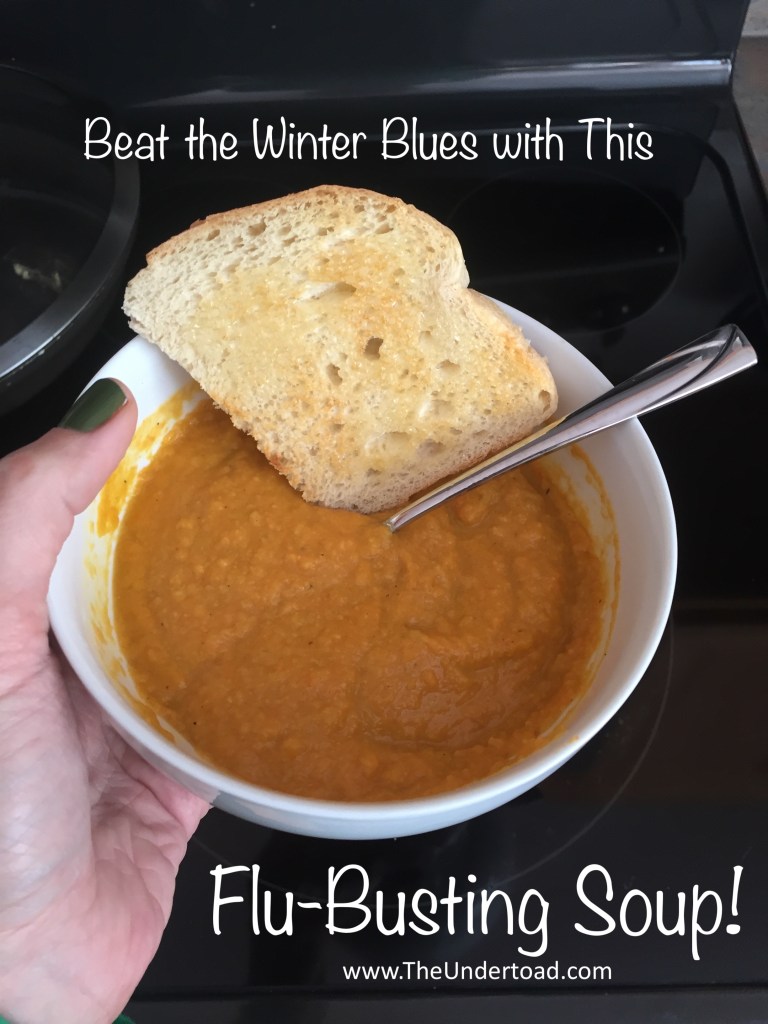






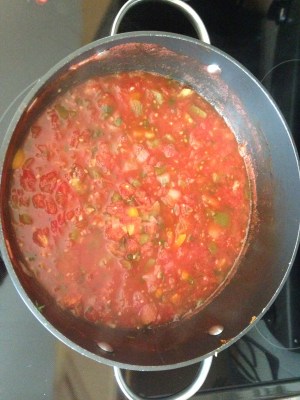
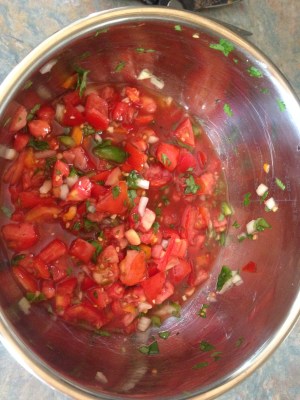


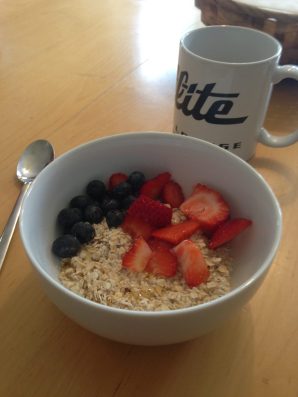
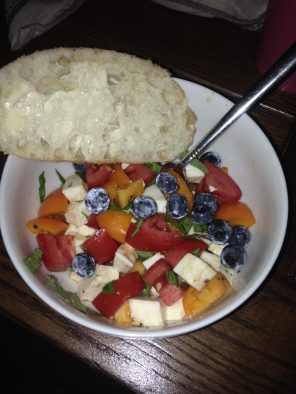
 : 5000, before bed, except during summer.
 /vitamin C: taken together after lunch.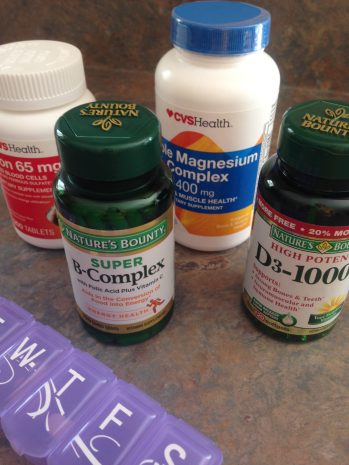


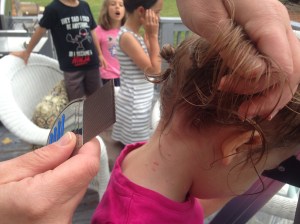


 SCOBY Plus Some Starter Tea (click to buy these awesome jars)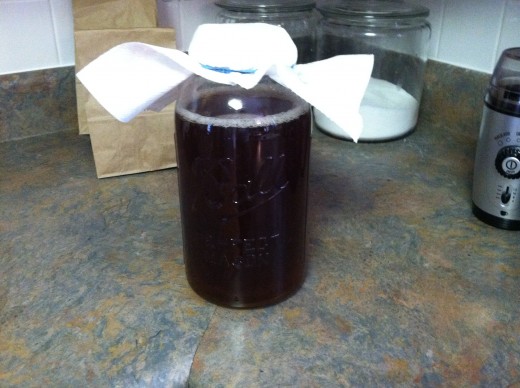
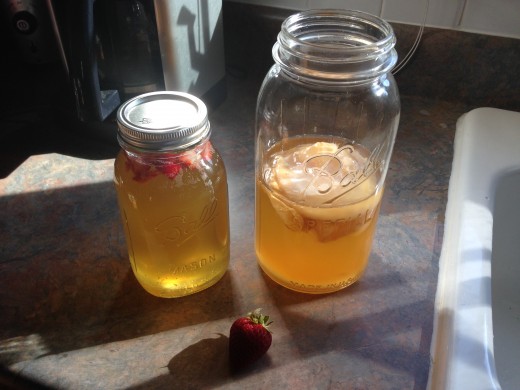

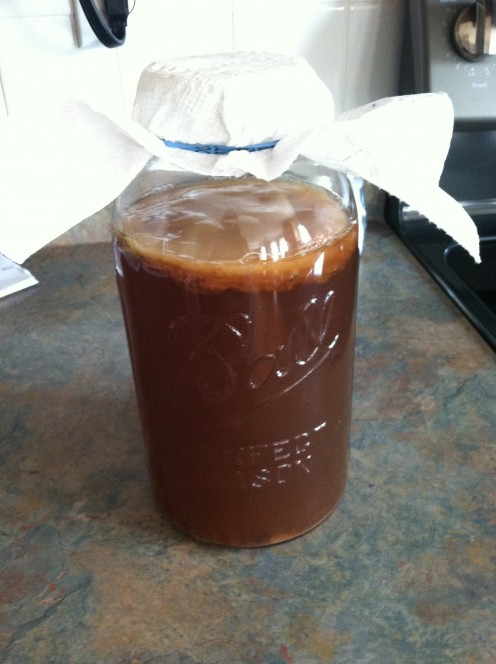


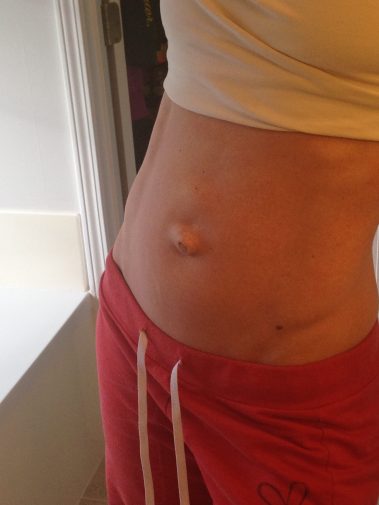
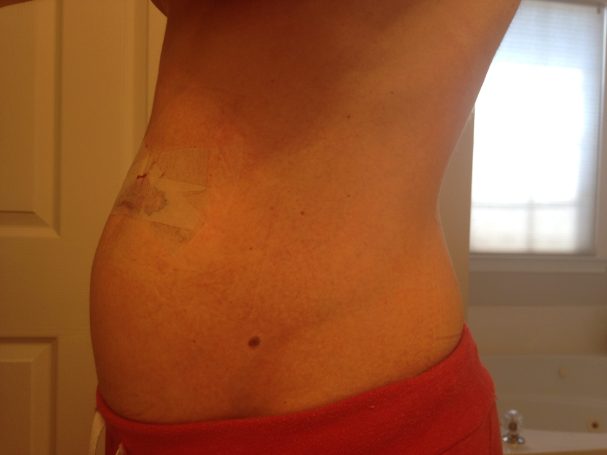


 , which worked so well on my knee surgery scar I’ve been a convert for life.
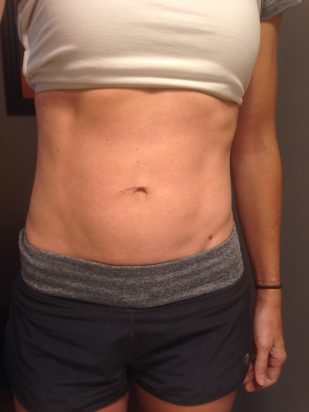

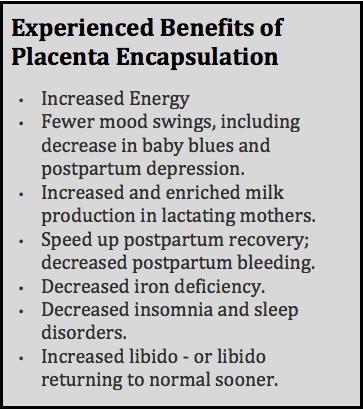


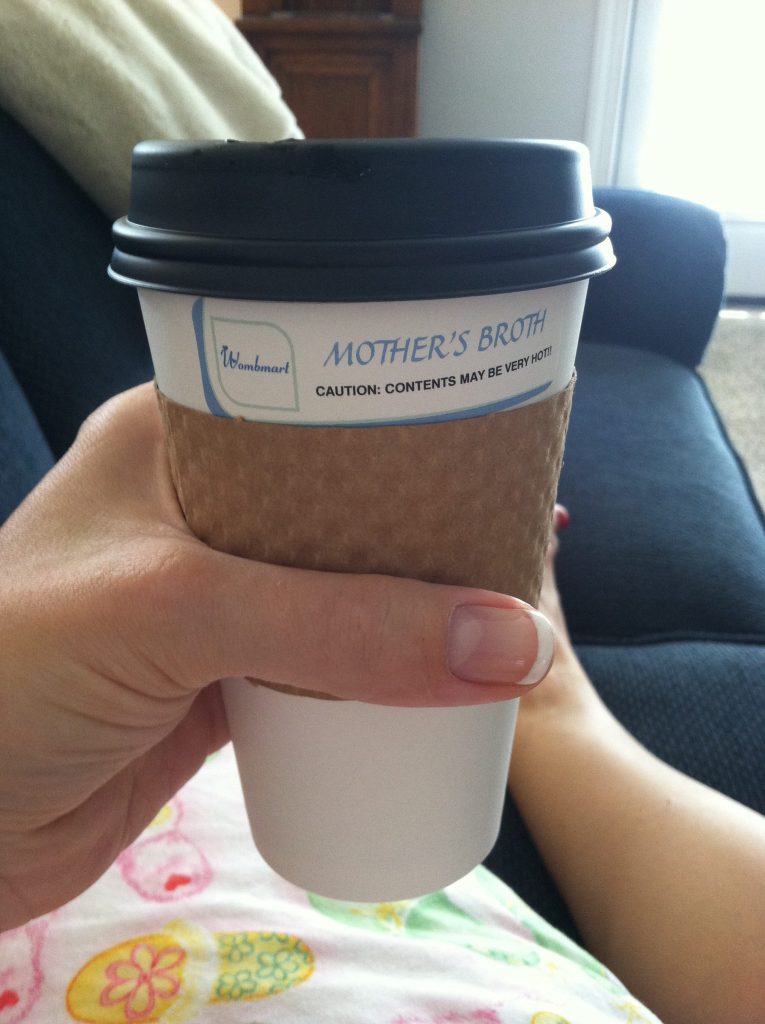


 The UnderToad